Voltage Stabilizer for Textile Industry - Protect Equipment and Boost Production Efficiency

All Categories
Get a Quote
%}

Get a Free Quote

Our representative will contact you soon.
Email
Mobile/WhatsApp
Name
Message
0/1000

voltage stabilizer for textile industry

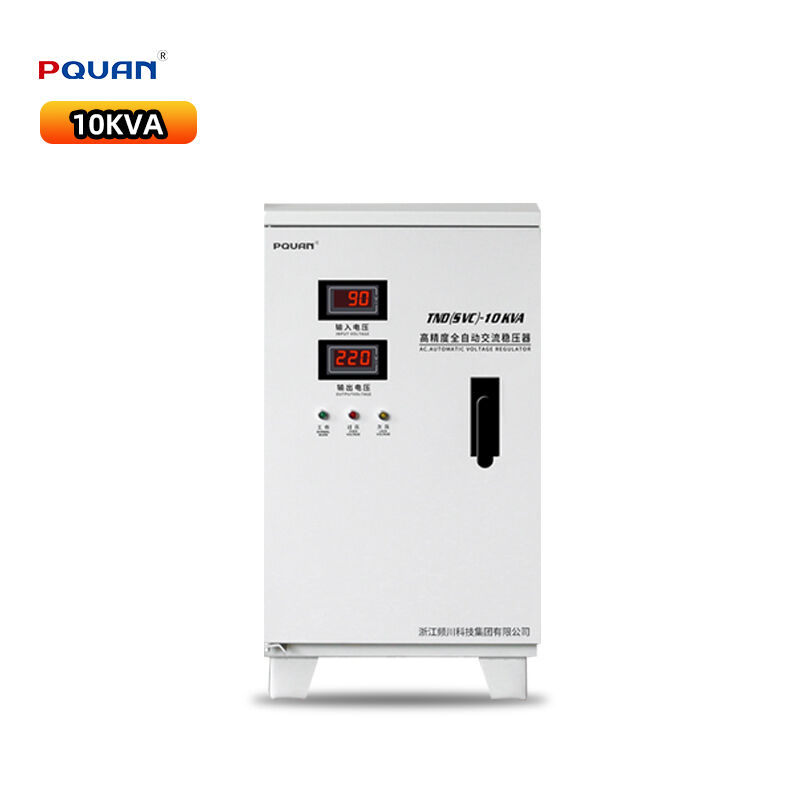
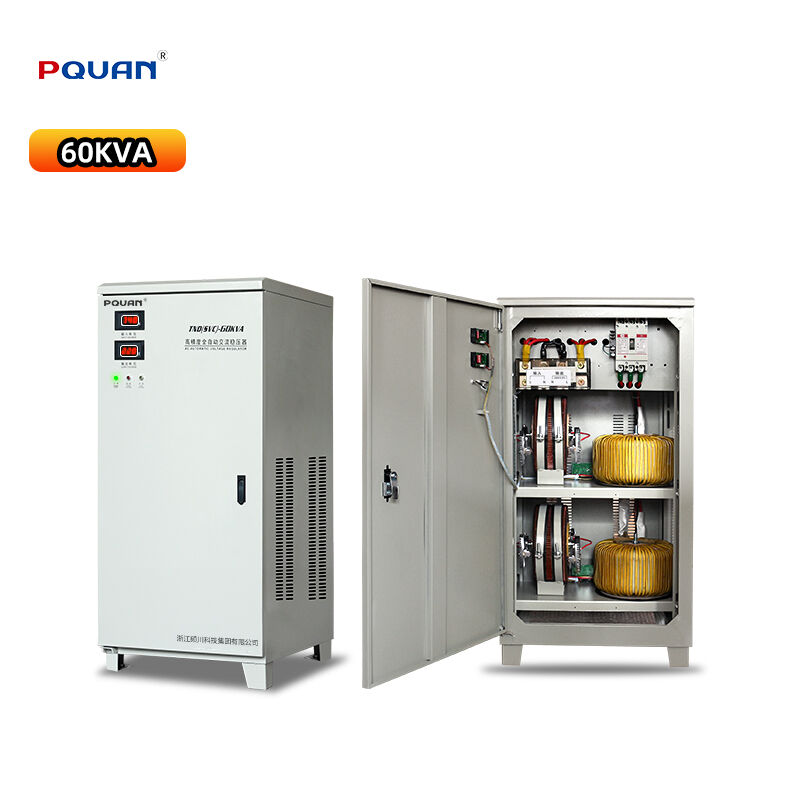
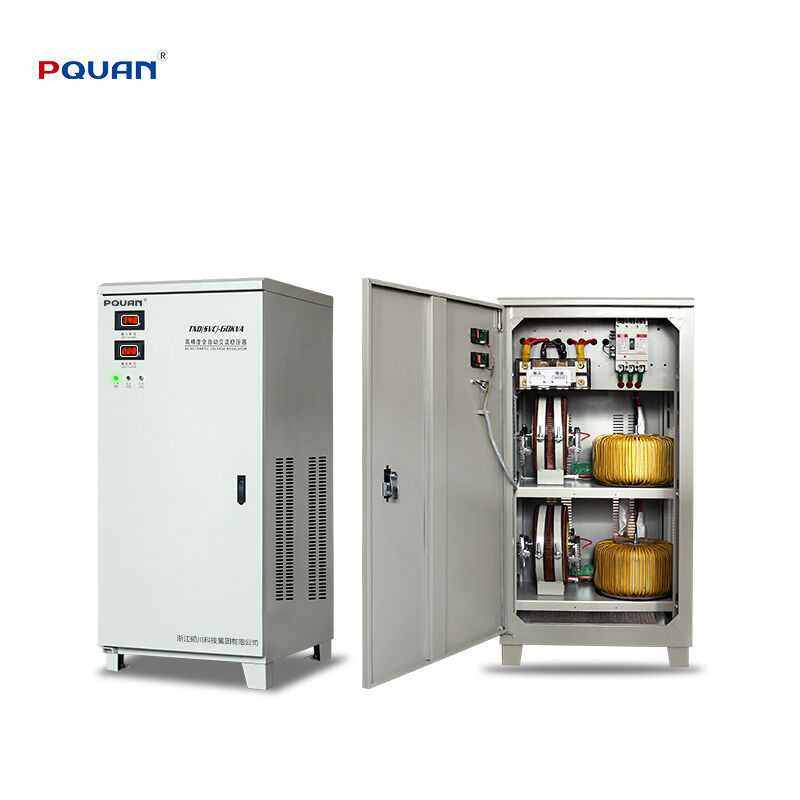
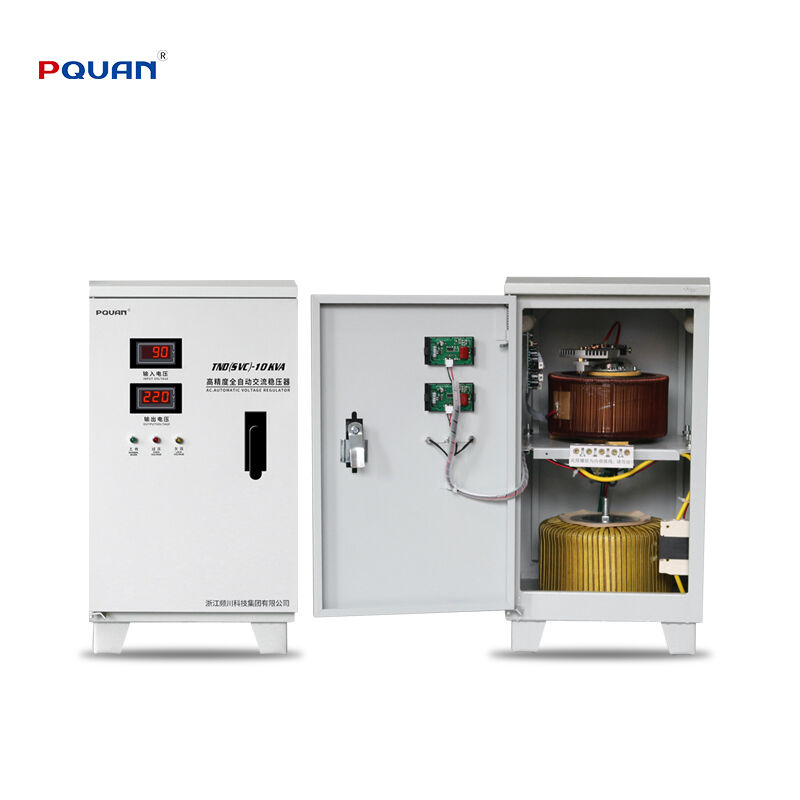
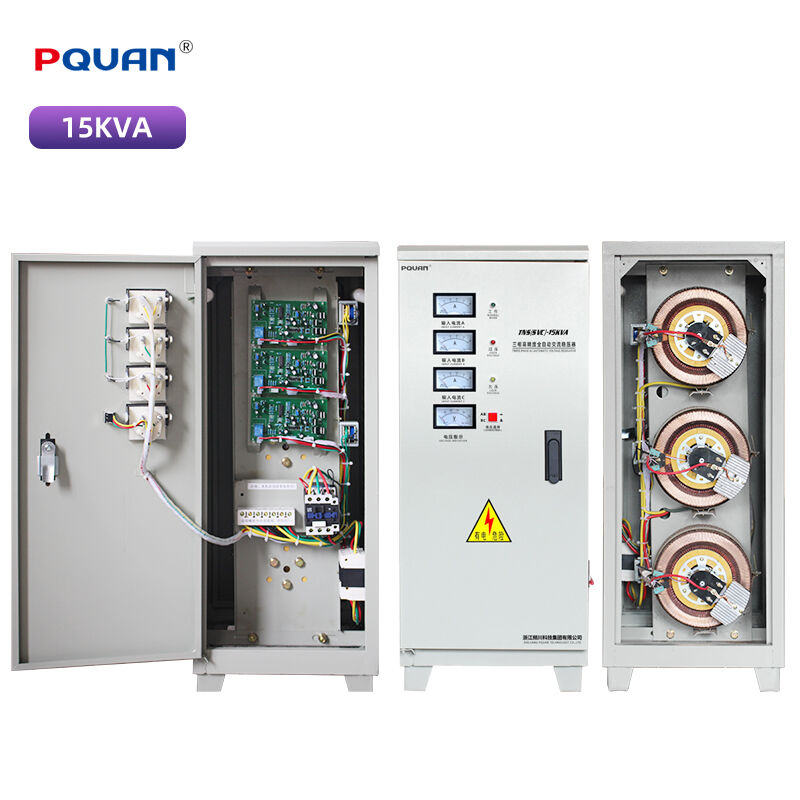
A voltage stabilizer for textile industry serves as an essential electrical protection device designed to maintain consistent voltage supply to manufacturing equipment and machinery throughout textile production facilities. This specialized power conditioning equipment protects sensitive textile manufacturing machines from voltage fluctuations, power surges, and electrical disturbances that commonly occur in industrial settings. The primary function of a voltage stabilizer for textile industry involves monitoring incoming electrical supply and automatically adjusting output voltage to maintain steady levels within acceptable ranges, typically plus or minus one to two percent of nominal voltage ratings. Textile manufacturing processes require precise electrical conditions to ensure consistent product quality, optimal machine performance, and extended equipment lifespan. Modern voltage stabilizers employ advanced servo motor technology, automatic voltage regulation mechanisms, and microprocessor-based control systems to deliver reliable power conditioning. These devices continuously monitor input voltage levels and respond instantaneously to fluctuations by adjusting internal transformer taps through precision control circuits. The voltage stabilizer for textile industry accommodates various load capacities ranging from small individual machines to entire production lines consuming hundreds of kilowatts. Technological features include digital display panels showing real-time voltage readings, overload protection circuits, short circuit safety mechanisms, and thermal shutdown capabilities. Applications span across all textile manufacturing segments including spinning mills, weaving facilities, dyeing and finishing units, knitting operations, and garment manufacturing plants. Each textile process demands stable electrical supply to maintain temperature controls in dyeing machines, precise speed regulation in spinning frames, consistent tension in weaving looms, and accurate motor control in automated cutting equipment. The voltage stabilizer for textile industry prevents costly production downtime, reduces rejected materials, eliminates machine malfunctions caused by voltage variations, and significantly decreases maintenance expenses while ensuring worker safety and regulatory compliance with industrial electrical standards.

New Products

Installing a voltage stabilizer for textile industry delivers immediate and long-term benefits that directly impact your bottom line and operational efficiency. First, you protect expensive textile machinery from electrical damage that occurs when voltage levels swing above or below safe operating ranges. These protective devices act as insurance for your capital investment, preventing burnout of motor windings, damage to electronic control boards, and failure of sensitive sensors that modern textile equipment depends upon. Your production quality improves dramatically because stable voltage ensures consistent machine performance. Spinning frames maintain uniform tension and speed, producing yarn with even thickness and strength. Dyeing machines hold precise temperatures without fluctuation, resulting in accurate color matching and dye penetration. Weaving looms operate at steady speeds, creating fabric with consistent weave patterns and fewer defects. This consistency reduces waste material, decreases rejected products, and enhances your reputation for quality output. Your energy costs decrease when equipment receives optimal voltage levels. Motors drawing power at incorrect voltages consume excess electricity and generate unnecessary heat, wasting energy and increasing utility bills. A voltage stabilizer for textile industry optimizes power delivery, allowing machines to operate at peak efficiency with minimal energy waste. You experience fewer unexpected breakdowns and emergency repairs because equipment operates within designed electrical parameters. This reliability translates to better production scheduling, improved deadline management, and enhanced customer satisfaction. Your maintenance expenses drop significantly as motors, bearings, and electronic components experience less stress and wear when supplied with stable voltage. Equipment lifespan extends considerably, delaying costly replacement purchases and maximizing return on machinery investments. Worker safety improves because electrical faults, sparking, and equipment failures diminish substantially. Your facility complies more easily with industrial safety regulations and electrical codes. Production capacity increases as machines run continuously without voltage-related interruptions. You avoid the cascading problems that occur when unstable power causes one machine to fail, creating bottlenecks throughout the production line. Your facility gains operational flexibility because a voltage stabilizer for textile industry handles varying loads as different machines cycle on and off throughout production shifts. The device automatically compensates for these changing demands without manual intervention. You protect against external electrical grid problems beyond your control, insulating your operations from utility company issues, neighborhood industrial loads, and weather-related power disturbances. Modern stabilizers provide monitoring data that helps you understand electrical consumption patterns, identify problematic equipment, and make informed decisions about facility upgrades. Installation proves straightforward with minimal disruption to existing operations, and the device requires little ongoing maintenance while delivering continuous protection. These practical advantages combine to improve profitability, enhance competitiveness, and provide peace of mind that your textile operations receive the reliable electrical foundation necessary for success in demanding manufacturing environments.

Practical Tips

Voltage Regulator Types: Which One Is Right for Your Application?

17

Mar

Voltage Regulator Types: Which One Is Right for Your Application?

In the industrial sector, maintaining a steady, reliable power supply is essential to safeguarding sophisticated automated machinery, high-precision laboratory instruments, and data infrastructures. A voltage regulator serves as a vital safeguard aga...
View More
Common Problems with Voltage Stabilizers and How to Troubleshoot Them

16

Apr

Common Problems with Voltage Stabilizers and How to Troubleshoot Them

In many industrial and commercial facilities, voltage stabilizers are the unsung heroes of electrical reliability. These devices work tirelessly behind the scenes to smooth out unpredictable grid fluctuations, protecting sensitive machinery from the ...
View More
Benefits of Using VFD Drives for Pump and Fan Applications

26

May

Benefits of Using VFD Drives for Pump and Fan Applications

In modern industrial facilities, fluid and air handling systems represent a massive portion of total energy expenditure. Traditionally, centrifugal pumps and ventilation fans operated at a constant, fixed speed, utilizing mechanical throttling valves...
View More
How to Choose the Right AC Drive for Your Industrial Needs

01

Jun

How to Choose the Right AC Drive for Your Industrial Needs

In modern industrial automation, optimizing energy efficiency and maintaining precise control over motor speeds are critical for operational success. An AC Drive (Alternating Current Drive), also commonly known as a Variable Frequency Drive (VFD), pl...
View More

Get a Free Quote

Our representative will contact you soon.
Email
Mobile/WhatsApp
Name
Message
0/1000

voltage stabilizer for textile industry

Advanced Protection Technology Safeguards Critical Textile Manufacturing Equipment

Advanced Protection Technology Safeguards Critical Textile Manufacturing Equipment

The voltage stabilizer for textile industry incorporates sophisticated protection technology specifically engineered to address the unique electrical challenges faced by textile manufacturing facilities. At its core, the system utilizes servo-controlled voltage regulation that responds within milliseconds to input voltage changes, ensuring output remains rock-steady regardless of supply fluctuations. This rapid response capability proves crucial in textile environments where sudden load changes occur frequently as multiple machines start and stop throughout production cycles. The stabilizer employs a precision servo motor coupled with a variable autotransformer, creating a continuously adjustable voltage correction system far superior to older tap-changing designs. Microprocessor control units monitor dozens of electrical parameters simultaneously, including input voltage, output voltage, load current, frequency stability, harmonic distortion, and thermal conditions. When the system detects abnormal conditions, it activates appropriate protective responses ranging from gentle correction to immediate shutdown depending on severity. Built-in surge suppression circuits guard against lightning strikes and switching transients that commonly damage sensitive electronic controls in programmable logic controllers, variable frequency drives, and computerized textile machinery. The voltage stabilizer for textile industry features comprehensive overload protection that prevents damage during short-circuit conditions while allowing temporary overloads during normal machine startup sequences. Thermal sensors embedded throughout the transformer windings and power components trigger cooling fans or protective shutdown before temperatures reach damaging levels. The system includes phase imbalance correction for three-phase installations, ensuring balanced loads across all phases even when single-phase equipment creates asymmetrical demands. This balance protection extends motor life substantially and prevents nuisance tripping of circuit breakers. Advanced filtering reduces electrical noise and harmonic pollution generated by modern variable speed drives and electronic equipment, creating cleaner power that benefits all connected devices. The stabilizer housing provides robust protection against dust, humidity, and temperature extremes typical in textile facilities, with weatherproof enclosures available for installations in challenging environments. Ventilation systems prevent internal heat buildup while maintaining ingress protection ratings suitable for industrial atmospheres containing textile fibers and processing chemicals. Comprehensive indicator systems provide immediate visual status confirmation through LED displays and warning lights, while detailed digital readouts allow maintenance personnel to monitor exact voltage levels, load percentages, and operational parameters. Remote monitoring capabilities enable facility managers to track stabilizer performance from central control rooms, receiving instant alerts about potential problems before they impact production. This advanced protection technology represents a significant investment in production reliability, delivering measurable returns through reduced downtime, extended equipment life, improved product quality, and lower maintenance costs while providing the robust electrical foundation that modern textile manufacturing demands for competitive success.
Customizable Capacity Options Perfectly Match Diverse Textile Production Requirements

Customizable Capacity Options Perfectly Match Diverse Textile Production Requirements

Understanding that textile facilities vary enormously in size, equipment complement, and power demands, manufacturers offer the voltage stabilizer for textile industry in an extensive range of capacity options that precisely match specific operational requirements. Small spinning operations might require stabilizers handling ten to twenty kilowatts for individual machines, while large integrated textile complexes need systems managing several hundred kilowatts or even megawatt-level installations protecting entire production floors. This scalability ensures businesses invest appropriately without paying for unnecessary capacity or risking inadequate protection from undersized equipment. Single-phase stabilizers serve smaller machines and specialized equipment, three-phase models support standard industrial textile machinery, and custom configurations accommodate unique electrical arrangements in renovated facilities or mixed equipment environments. Load capacity selection involves careful analysis of connected equipment, considering not just nominal running loads but also startup surge currents that can temporarily exceed normal operation by three to six times, particularly for large motors driving spinning frames, air compressors, and textile processing equipment. Professional sizing calculations account for future expansion plans, ensuring the voltage stabilizer for textile industry provides adequate headroom for adding machines without requiring replacement. Modular designs allow incremental capacity increases by adding parallel units, protecting initial investment while maintaining upgrade flexibility as businesses grow. Manufacturers provide detailed specification sheets listing precise capacity ratings, efficiency curves, regulation accuracy, response times, and environmental operating ranges enabling informed selection decisions. Installation flexibility accommodates various facility layouts, with floor-mounted, wall-mounted, and rack-mounted configurations available depending on space constraints and accessibility requirements. Connection options include hard-wired installations for permanent equipment and plug-and-socket arrangements for portable machinery or temporary production setups. The voltage stabilizer for textile industry integrates seamlessly with existing electrical distribution systems, installing downstream from main breakers but upstream from protected equipment, creating a protective barrier between utility supply irregularities and sensitive manufacturing machines. Bypass circuits incorporated in larger systems allow maintenance without production shutdown, automatically switching to direct utility supply when stabilizer servicing occurs while restoring protected operation immediately upon completion. Parallel redundancy configurations provide ultimate reliability for critical operations, employing multiple stabilizers sharing load responsibilities where failure of one unit triggers automatic load transfer to remaining units without production interruption. Specialized models address particular textile processes, with stabilizers designed specifically for dyeing operations featuring enhanced tolerance for high inrush currents from heating elements, while spinning mill versions optimize for motor-heavy loads with specific power factor characteristics. Energy-efficient designs minimize losses during voltage conversion, typically achieving ninety-five to ninety-eight percent efficiency ensuring the protection device itself does not significantly increase operating costs. This comprehensive range of customizable capacity options, installation configurations, and specialized features ensures every textile operation from small job shops to multinational manufacturing facilities finds the ideal voltage stabilizer for textile industry matching their technical requirements, budget constraints, and operational priorities while delivering optimal protection and performance.
Proven Return on Investment Through Reduced Costs and Enhanced Production Reliability

Proven Return on Investment Through Reduced Costs and Enhanced Production Reliability

Implementing a voltage stabilizer for textile industry delivers compelling financial returns that justify the initial investment through multiple cost reduction mechanisms and productivity improvements quantifiable in standard business metrics. Equipment replacement costs decrease substantially because motors, electronic drives, control systems, and mechanical components last significantly longer when operating with stable voltage supply. Textile machinery represents major capital investment, with individual machines costing tens of thousands to hundreds of thousands of dollars, making premature failure financially devastating. Voltage fluctuations accelerate wear on motor bearings, damage insulation systems in windings, degrade electronic components through thermal stress, and cause mechanical failures in precision parts. By eliminating these stresses, the voltage stabilizer for textile industry extends equipment lifespan by thirty to fifty percent, deferring replacement purchases and maximizing depreciation value. Maintenance expenses drop dramatically as equipment experiences fewer breakdowns, requires less frequent servicing, and operates reliably between scheduled maintenance intervals. Maintenance labor costs decrease because technicians spend time on preventive care rather than emergency repairs, and spare parts inventory requirements reduce when components fail less frequently. Energy consumption improvements generate ongoing savings as motors and electrical equipment operate at optimal efficiency levels. Studies consistently demonstrate that equipment supplied with incorrect voltage wastes five to fifteen percent of electrical energy, translating directly to higher utility bills. For textile facilities consuming hundreds of kilowatts continuously, these efficiency gains accumulate to substantial annual savings. Production uptime increases measurably because voltage-related shutdowns, nuisance trips, and equipment failures virtually disappear. Even brief production interruptions cost significant money in lost output, wasted materials, restart time, and missed delivery deadlines. The voltage stabilizer for textile industry provides continuous operation assurance that production managers depend upon for meeting schedules and maintaining customer relationships. Product quality improvements reduce rejection rates, rework costs, and customer complaints. When dyeing machines maintain precise temperatures, spinning frames hold consistent speeds, and weaving looms operate steadily, output quality becomes predictable and consistent. This consistency enhances brand reputation, enables premium pricing, and builds customer loyalty that drives repeat business. Insurance premiums may decrease when facilities demonstrate proactive electrical protection reducing fire risks and equipment damage potential. Many insurance carriers recognize voltage stabilizers as loss prevention measures worthy of premium discounts. Regulatory compliance becomes easier and less expensive when electrical systems meet industrial safety standards and operate within designed parameters. Avoiding citations, fines, and mandated corrective actions saves money and management time. The voltage stabilizer for textile industry typically achieves payback within eighteen to thirty-six months depending on facility size, equipment value, and electrical supply quality, after which all benefits represent pure profit improvement. Businesses financed through equipment loans find monthly payments often offset by immediate operational savings, making cash flow impact minimal or positive. Beyond quantifiable financial returns, the device provides intangible value through reduced management stress, improved worker morale from reliable equipment, enhanced competitive positioning, and operational confidence that electrical infrastructure supports business growth ambitions. These combined financial and operational benefits make the voltage stabilizer for textile industry not merely a protective device but a strategic investment in business success and long-term profitability.

Voltage Stabilizer for Textile Industry - Protect Equipment and Boost Production Efficiency

Get a Free Quote

Our representative will contact you soon.
Email
Mobile/WhatsApp
Name
Message
0/1000