 EN
EN

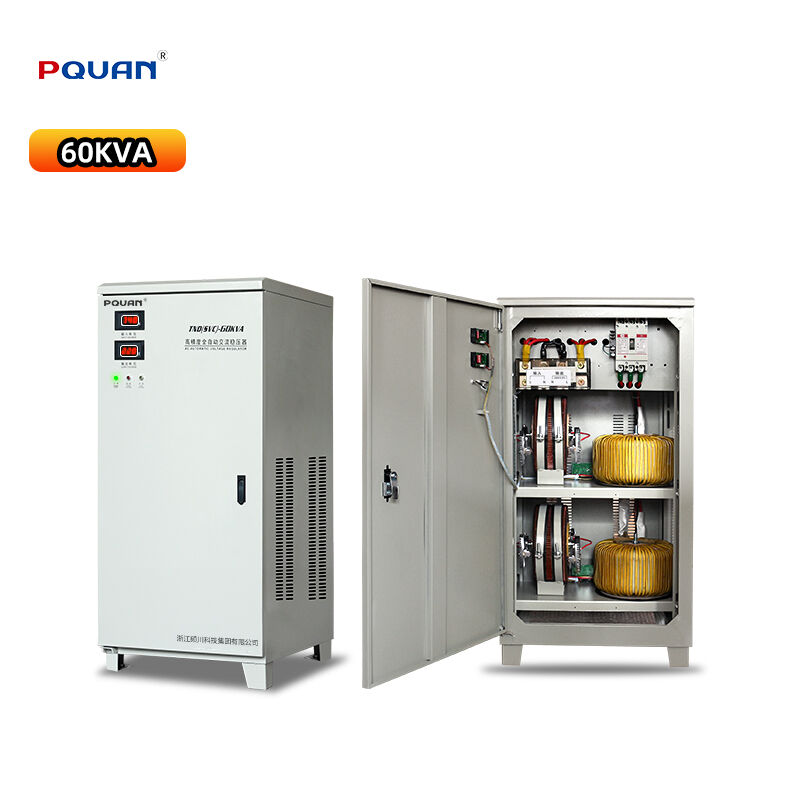
In many industrial and commercial facilities, voltage stabilizers are the unsung heroes of electrical reliability. These devices work tirelessly behind the scenes to smooth out unpredictable grid fluctuations, protecting sensitive machinery from the destructive effects of sags, surges, and electrical noise. However, like any hardworking piece of industrial power electronics, a voltage stabilizer can experience wear, component fatigue, or operational faults over time.
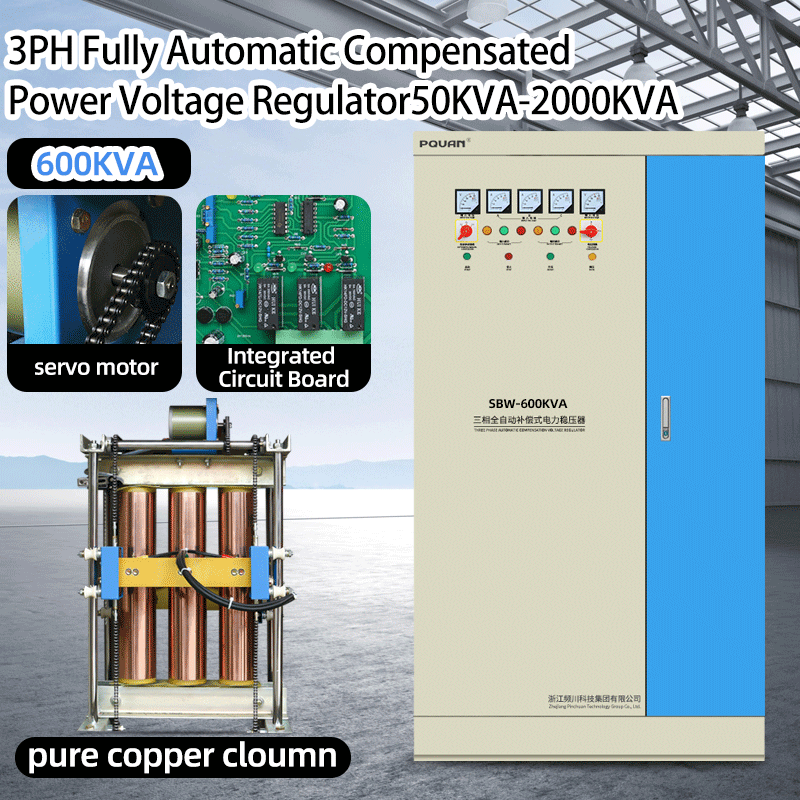
When a stabilizer malfunctions, it can leave your entire downstream production line exposed to erratic power quality. Recognizing the early warning signs of equipment failure and knowing how to systematically troubleshoot common issues can prevent catastrophic equipment damage and save your business thousands of dollars in unscheduled downtime.
The Stabilizer Fails to Turn On or Lacks Output Power
One of the most immediate issues operators encounter is a system that completely refuses to power up, or a unit that appears active but delivers absolutely zero voltage to connected industrial equipment.
This issue typically traces back to incoming power failures or activated safety mechanisms. Begin your inspection at the main circuit breaker or input fuses to ensure the unit is receiving adequate line voltage from the grid. If the input power is verified but the system remains unresponsive, the culprit is often an activated high-voltage or low-voltage cutoff protection circuit. When incoming grid voltage fluctuates far beyond the designed regulatory range of the hardware, the system intentionally disconnects the output to save downstream motors and controllers from frying.
Errant or Fluctuating Output Voltage Readings
A primary function of voltage stabilizers is to deliver a perfectly flat, nominal output regardless of input volatility. If the output display shows fluctuating voltages or fails to hold steady within specified tolerances, the internal regulation mechanism is compromised.
The underlying cause depends largely on the architecture of your specific unit. In electromechanical servo-driven systems, this erratic behavior frequently points to worn-out carbon brushes or a seized servo motor that can no longer adjust the transformer taps smoothly. In static electronic systems, fluctuating outputs are typically caused by drifting reference voltages on the main control PCB or failing solid-state thyristors. The following matrix simplifies the diagnostic process by matching output symptoms with their mechanical or electrical root causes.
| Observed Output Symptom | Most Likely Root Cause | Recommended Troubleshooting Action |
| Output voltage tracks input perfectly without regulating. | Internal bypass switch is engaged or thyristor is shorted. | Check control panel settings; inspect power semiconductors for faults. |
| Output voltage is consistently too high or too low. | Miscalibrated control board or corrupted reference voltage. | Recalibrate the feedback loop potentiometer or update control firmware. |
| Output drops dramatically when machinery starts up. | Stabilizer capacity is undersized for the motor inrush current. | Measure full load amps; upgrade to a higher kVA capacity unit. |
Excessive Noise, Humming, and Overheating Issues
While a faint, steady hum is normal for large magnetic components, a sudden increase in operational noise or a spike in enclosure temperature indicates severe internal stress.
Excessive audible buzzing or rattling usually stems from loose transformer laminations or degraded internal mounting hardware vibrating under electromagnetic load. Overheating, on the other hand, is a critical thermal hazard that threatens the insulation of internal copper windings. Check the integrated cooling fans to ensure they are spinning freely and clear of factory dust accumulation. If the cooling paths are clean but temperatures remain high, the system may be experiencing a prolonged overload condition caused by expanding facility demands that exceed the unit's continuous rating.
Frequent Tripping of Protective Circuit Breakers
If the input or output circuit breaker of your voltage stabilizers trips repeatedly throughout a production shift, the system is actively defending itself against an overcurrent anomaly.
Before blaming the stabilizer hardware, investigate whether new automated machinery, CNC tools, or heavy cooling compressors have been added to the downstream loop. Inductive loads draw massive inrush currents during startup that can easily trigger the quick-trip mechanisms of protective breakers. If the connected load has not changed, the frequent tripping may indicate an internal insulation breakdown within the stabilizer's autotransformer windings, creating a localized short circuit that demands immediate professional maintenance.
Proactive Maintenance Strategies to Minimize Faults
The most effective way to troubleshoot equipment problems is to prevent them from developing in the first place through a rigid preventative maintenance schedule.
Industrial environments are naturally prone to airborne contaminants like dust, metallic particles, and moisture, which settle on internal electronics and form conductive paths that cause short circuits. Dedicate operational downtime every quarter to isolate the unit, open the access panels, and clear out debris using low-pressure compressed air. For servo-driven units, clean the copper commutator tracks using specialized electrical contact cleaners and replace carbon brushes before they wear down to the metal holder, ensuring clean physical contact and spark-free tap changing.
Frequently Asked Questions
Why does my voltage stabilizer emit a loud clicking sound during operation?
Frequent clicking sounds are completely normal for relay-type electronic stabilizers. This noise occurs when the internal control circuit detects a shift in input grid voltage and engages a mechanical relay to switch transformer taps to adjust the output. However, if the clicking becomes rapid and continuous, it means your incoming power supply is highly unstable, or the control board's hysteresis setting is miscalibrated, causing the relays to hunt excessively.
Can I temporarily bypass a malfunctioning stabilizer to keep my plant running?
Most heavy-duty industrial stabilizers feature an integrated manual bypass switch designed exactly for this scenario. Switching to bypass routes raw grid utility power directly to your machinery, allowing you to service or remove the stabilizer without shutting down operations. However, you should only utilize the bypass mode if your local utility grid is reasonably stable at that moment, as your sensitive downstream electronics will be completely unprotected while the stabilizer is offline.
How do I know if an internal circuit board needs replacement or just calibration?
If the stabilizer responds logically to voltage variations but holds the output at a slightly incorrect value (such as 215V instead of 230V), it typically just requires a simple calibration of the feedback circuit using the onboard interface or trimpots. If the system completely ignores input shifts, displays cryptic error codes, or fails to drive the servo motor or thyristors entirely, the main microprocessor or control PCB has likely suffered a component failure and requires a full replacement.