 EN
EN
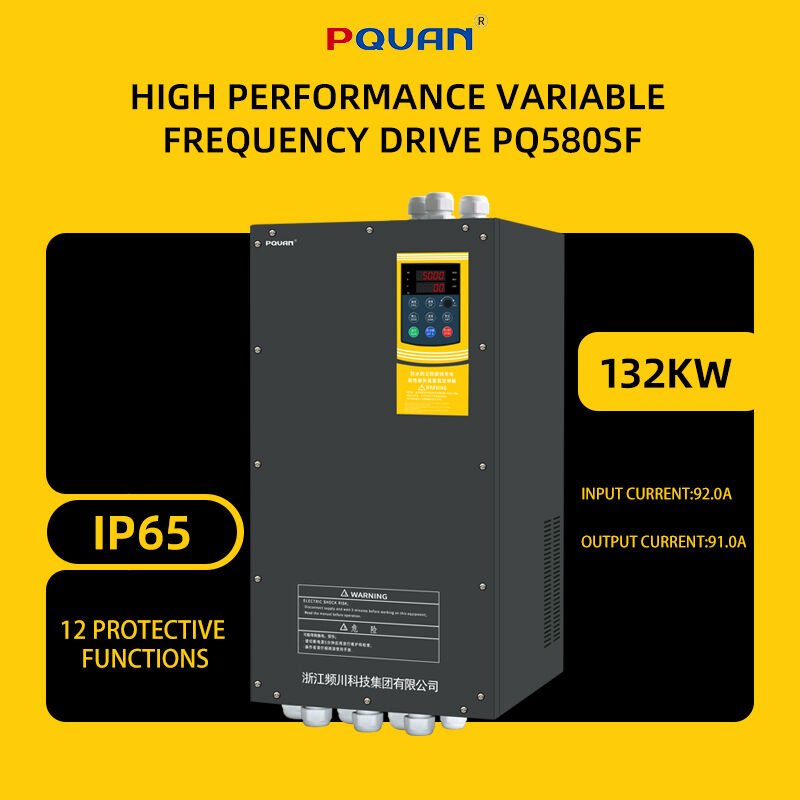
In modern industrial facilities, fluid and air handling systems represent a massive portion of total energy expenditure. Traditionally, centrifugal pumps and ventilation fans operated at a constant, fixed speed, utilizing mechanical throttling valves or restrictive dampers to regulate output flow. This outdated approach wastes significant amounts of electrical power and subjects hardware to unnecessary mechanical stress. Integrating high-performance VFD drives into these systems offers a highly efficient alternative, allowing operators to precisely match motor speeds to actual process demands.
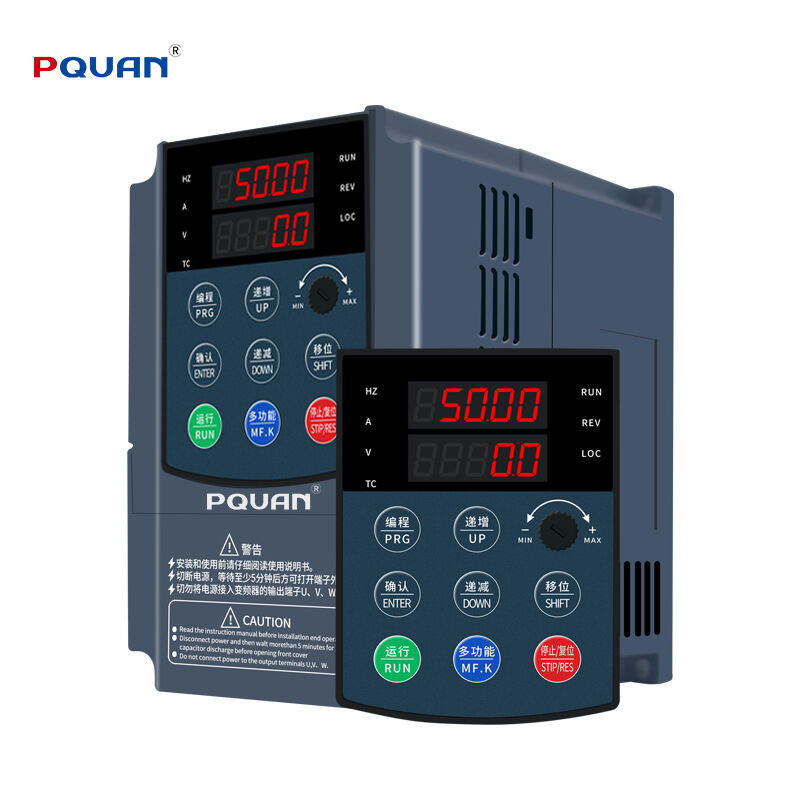
Whether managing high-volume industrial water pumps or large facility HVAC ventilation fans, leveraging advanced motor control technology yields instant operational advantages. Implementing VFD drives does more than just optimize energy consumption; it fundamentally improves process control accuracy, lowers overall maintenance overhead, and extends the physical operational lifespan of your entire rotating equipment asset fleet.
Substantial Energy Savings via the Affinity Laws
The most compelling argument for deploying VFD drives in centrifugal pump and fan configurations is the drastic reduction in facility electricity consumption. Centrifugal loads operate under specific aerodynamic and hydrodynamic principles known mathematically as the Affinity Laws. These laws dictate that the power consumed by a pump or fan motor is proportional to the cube of its rotational speed.
Because of this cubic relationship, even a minor reduction in operating speed yields immense energy savings. For example, reducing a fan's speed by just twenty percent drops the required power output of the motor by nearly half. Traditional throttling methods simply choke the flow while forcing the motor to run at full speed against high backpressure, wasting energy as friction and heat. Utilizing a drive to lower the actual motor velocity ensures that your facility only pays for the exact amount of kinetic energy required by the process at any given moment.
Elimination of Mechanical Shock and Water Hammer
Direct-on-line (DOL) motor starting across raw utility power grids introduces severe mechanical and electrical stress. When a large pump or fan motor starts instantly from a standstill, it draws an inrush current up to six to eight times its normal running current, while delivering a violent spike of mechanical torque. This sudden torque surge stresses drive belts, gearboxes, couplings, and motor rotor bars, leading to premature mechanical alignment failures.
By routing power through VFD drives, maintenance teams can implement fully customized, linear acceleration and deceleration ramps. The drive smoothly accelerates the motor from zero to its target operating speed over a defined period, keeping the electrical current strictly within safe nominal limits. In pumping networks, this controlled ramp-down capability is particularly vital as it slowly decelerates the fluid column, completely eradicates destructive water hammer effects, and protects pipeline check valves from catastrophic pressure-wave ruptures.
Enhanced Process Control and System Integration
Industrial automation relies heavily on real-time adaptation to changing environmental metrics, such as maintaining a constant water pressure in a high-rise building or a stable static pressure inside a factory ventilation duct. Premium motor drives feature built-in, highly responsive Proportional-Integral-Derivative (PID) control loops. By connecting a feedback pressure transducer or flow meter directly to the drive’s analog input terminals, the system automatically self-regulates its operating frequency to stabilize the process parameter without requiring an external controller.
Furthermore, these drives serve as data-rich nodes within modern smart factories. Equipped with native industrial communication interfaces—such as Modbus RTU, Profibus, or EtherNet/IP—they stream critical telemetry back to a centralized PLC or SCADA system. Operators can monitor live current draw, motor temperature, and running hours in real time, allowing engineering teams to shift from reactive troubleshooting to highly predictive maintenance workflows.
Application Capabilities and Operational Impact Matrix
To assist your engineering team during the system evaluation and procurement process, the reference matrix below illustrates how specific drive features target the distinct technical challenges found across standard fluid and air handling applications.
| Target Application | Dominant System Challenge | Critical VFD Feature | Direct Operational Benefit |
| Centrifugal Water Pumps | High pipeline pressure spikes and destructive water hammer. | Adjustable Deceleration Ramps & Built-in PID Loops | Eliminates pipeline stress by smoothing out fluid transitions while maintaining exact target pressure. |
| HVAC Ventilation Fans | Windmilling effects from natural drafts and structural resonance. | Flying Start Capability & Frequency Skip Bands | Catches a naturally spinning fan blade safely without tripping, while bypassing speeds that trigger structural vibration. |
| Material Handling Conveyors | High static friction when starting up fully loaded belts. | High-Torque Sensorless Vector Control | Supplies maximum starting torque from a complete dead stop without drawing massive line current surges. |
| Industrial Air Compressors | Rapid cyclic pressure drops due to fluctuating plant air demand. | High Overload Capacity & Fast Torque Response | Maintains highly stable pressure lines by adjusting motor velocities instantly to match real-time air consumption. |
Frequently Asked Questions
What is the purpose of the sleep mode feature in a pump VFD drive?
The sleep mode function is a highly effective energy-saving utility embedded in the drive's PID software. When fluid demand drops to zero—such as during night shifts in a water distribution network—the pump slows down to its minimum operating threshold. If the system pressure remains satisfied for a predetermined time, the drive automatically enters a "sleep" state, shutting down the motor completely until a drop in pressure triggers a seamless wake-up sequence.
How do VFD drives protect electric motors from electrical faults?
Modern drives feature highly sophisticated internal protective hardware circuits that continuously monitor output parameters. They provide instant, millisecond-level isolation against output short-circuits, phase-to-phase imbalances, ground faults, and thermal overloads. By tracking the motor's historical thermal load mathematically, the drive safely trips and displays a specific diagnostic fault code before irreversible insulation damage can occur within the motor windings.
Can any standard AC induction motor be operated by a variable frequency drive?
While standard AC induction motors can run on a drive, it is highly recommended to use an "Inverter-Duty" rated motor for long-term reliability. Drives utilize high-frequency pulse-width modulation (PWM) switching to construct output waveforms, which can create high-voltage insulation stresses and induce capacitive shaft currents. Inverter-duty motors feature upgraded winding insulation systems and insulated bearings to safely withstand these specific electrical challenges.
Why is harmonic distortion a consideration when installing multiple VFD drives?
Because drives operate as non-linear electrical loads, their internal rectifiers draw current from the power grid in rapid, non-continuous pulses rather than a smooth sinusoidal wave. This switching action generates electrical harmonic distortion back into your facility’s distribution line. If left unmanaged, heavy harmonics can cause localized transformer overheating and nuisance breaker tripping; installing integrated DC link chokes or input line reactors effectively neutralizes this noise.