Operational Reliability Maintains Research Continuity and Productivity
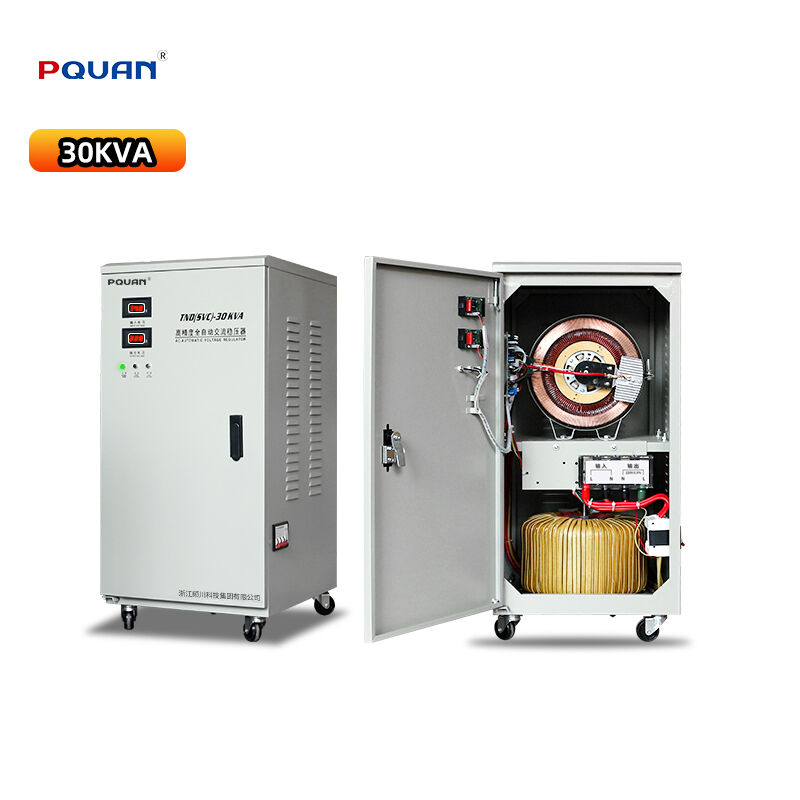
Research and testing laboratories operate under constant pressure to deliver results quickly while maintaining quality standards. A voltage stabilizer for laboratory installations plays a crucial role in maintaining operational reliability by ensuring equipment continues functioning despite external electrical disturbances. This reliability translates directly into productivity advantages that justify the investment many times over. Consider the impact of voltage-induced equipment shutdowns on laboratory operations. Modern instruments incorporate protective circuits that detect voltage abnormalities and shut down to prevent damage. While this protection saves equipment, each shutdown interrupts work in progress, potentially ruining experiments, wasting samples, and losing hours of work. In analytical chemistry, a voltage fluctuation during the middle of a chromatography run can invalidate the entire analysis, requiring complete restart with fresh samples and consuming another hour or more. In materials testing, voltage interruptions during tensile strength measurements create invalid data points requiring test repetition. Clinical laboratories processing patient samples face even greater consequences, as interrupted tests delay diagnosis and treatment while wasted samples may be irreplaceable. These interruptions accumulate into significant productivity losses. A laboratory experiencing voltage-related shutdowns just twice weekly loses approximately 100 hours annually to restarting experiments, recalibrating equipment, and repeating measurements. With average laboratory labor costs exceeding 50 dollars per hour, this represents 5000 dollars in direct labor waste, plus additional costs for consumed samples and delayed results. A voltage stabilizer for laboratory use eliminates these interruptions entirely, maintaining operations through voltage fluctuations that would otherwise halt work. The productivity benefit extends beyond avoiding interruptions to enabling more efficient workflow. When laboratory personnel trust their equipment to operate reliably, they can plan long-running experiments confidently, schedule sequential tests efficiently, and operate instruments overnight without supervision concerns. This confidence allows laboratories to increase throughput substantially, processing more samples per day and reducing turnaround times. For contract testing laboratories and quality control operations, faster turnaround creates competitive advantages and increased revenue potential. Sample preservation represents another critical reliability factor. Many laboratory samples are unique, expensive to obtain, or time-sensitive. Biological samples degrade if not analyzed promptly, environmental samples may be impossible to recollect if initial analysis fails, and production samples from manufacturing processes represent specific moments in time that cannot be recreated. Voltage-induced test failures waste these valuable samples, sometimes requiring expensive recollection efforts or making desired analysis impossible. Voltage stabilizers protect sample investments by ensuring tests complete successfully the first time. Furthermore, data integrity depends on uninterrupted operations. Modern laboratory instruments store data electronically during testing, and unexpected shutdowns can corrupt data files or lose measurements entirely. Even when experiments can be restarted, lost data means conclusions cannot be drawn and research progress stalls.
 EN
EN