All Categories
Get a Quote
%}

Get a Free Quote

Our representative will contact you soon.
Email
Name
Company Name
Message
0/1000

How Variable Frequency Drives Improve Motor Performance and Lifespan

2026-03-09 13:00:00
How Variable Frequency Drives Improve Motor Performance and Lifespan

Motor systems across industrial facilities worldwide face increasing demands for energy efficiency, precise control, and extended operational lifespans. Traditional motor control methods often fall short of meeting these requirements, leading to excessive energy consumption, premature equipment failure, and reduced productivity. A variable frequency drive represents a revolutionary solution that transforms how motors operate by controlling their speed and torque through sophisticated frequency modulation. This advanced technology has become essential for modern industrial applications, offering unprecedented control over motor performance while simultaneously reducing operational costs and environmental impact.

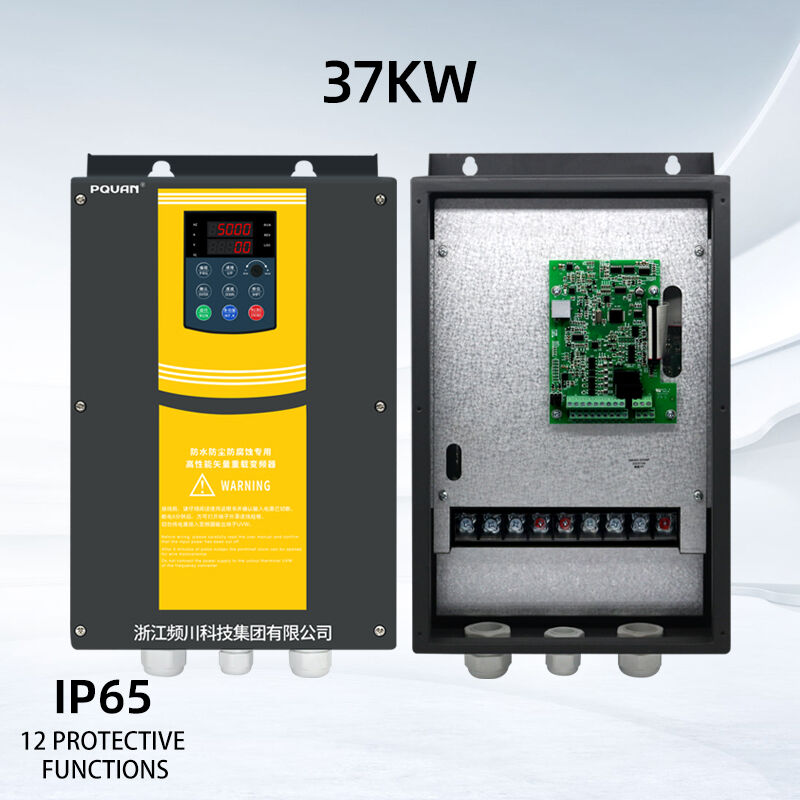
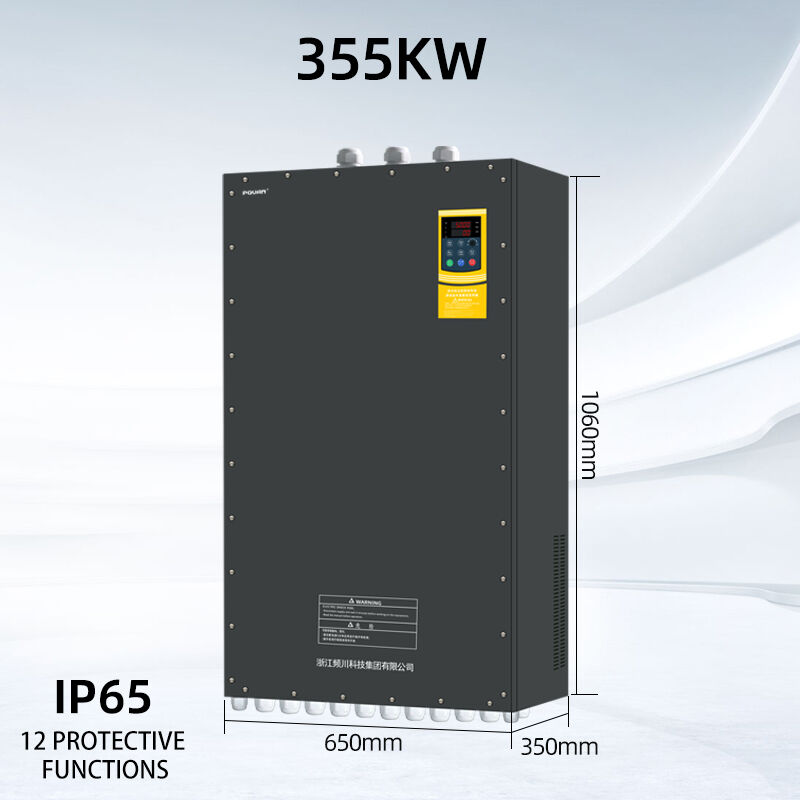
variable frequency drive

Understanding Variable Frequency Drive Technology

Core Components and Operating Principles

The fundamental architecture of a variable frequency drive consists of three primary sections: the rectifier, DC bus, and inverter. The rectifier converts incoming AC power to DC, while the DC bus stores and filters this power using capacitors and inductors. The inverter then converts the DC power back to AC with variable frequency and voltage output. This sophisticated process enables precise control over motor speed and torque by adjusting the frequency of the power supply delivered to the motor.

Modern variable frequency drive systems utilize pulse width modulation (PWM) technology to create smooth sinusoidal output waveforms. This technique switches the inverter output at high frequencies, typically between 2-15 kHz, to produce the desired voltage and frequency characteristics. The result is exceptionally precise motor control with minimal harmonic distortion, ensuring optimal motor performance across all operating conditions.

Advanced Control Methods and Algorithms

Contemporary variable frequency drive technology incorporates sophisticated control algorithms such as field-oriented control (FOC) and direct torque control (DTC). These methods enable the drive to monitor and adjust motor parameters in real-time, providing superior performance compared to traditional scalar control methods. FOC technology decouples torque and flux control, allowing for precise motor operation similar to DC motor characteristics.

Sensorless control capabilities have further enhanced variable frequency drive functionality, eliminating the need for external speed sensors while maintaining precise speed regulation. These systems use advanced mathematical models to estimate rotor position and speed based on motor current and voltage measurements. The elimination of external sensors reduces system complexity, installation costs, and potential failure points while maintaining exceptional control accuracy.

Motor Performance Enhancement Through VFD Implementation

Speed Control and Torque Management

The primary advantage of variable frequency drive implementation lies in its ability to provide infinitely variable speed control across the motor's operating range. Unlike traditional control methods that rely on mechanical devices or fixed-speed operation, VFD technology allows motors to operate at precisely the speed required by the application. This capability eliminates energy waste associated with throttling valves, dampers, and other mechanical control devices.

Torque control capabilities of modern variable frequency drive systems enable motors to deliver consistent torque output across varying speed ranges. This characteristic is particularly valuable in applications requiring constant torque at low speeds or variable torque profiles. The drive continuously monitors motor parameters and adjusts output accordingly, ensuring optimal torque delivery while preventing motor overload conditions that could lead to premature failure.

Efficiency Optimization and Energy Savings

Variable frequency drive technology dramatically improves motor system efficiency by matching motor speed to load requirements. Studies consistently demonstrate energy savings of 20-50% when VFDs replace traditional throttling control methods in centrifugal pump and fan applications. These savings result from the cubic relationship between speed and power consumption in centrifugal loads, where small speed reductions yield substantial power savings.

Advanced variable frequency drive systems incorporate automatic energy optimization features that continuously adjust motor operation for maximum efficiency. These systems monitor power consumption patterns and automatically adjust operating parameters to minimize energy waste while maintaining required performance levels. The result is sustained energy savings throughout the equipment lifecycle, significantly reducing operational costs and environmental impact.

Extending Motor Lifespan Through Intelligent Control

Soft Starting and Stopping Capabilities

Traditional across-the-line motor starting subjects equipment to severe electrical and mechanical stresses that contribute to premature failure. Motor starting currents can reach 6-8 times normal operating current, creating significant thermal stress and mechanical shock. Variable frequency drive technology eliminates these harmful effects by providing smooth, controlled acceleration and deceleration profiles that gradually bring motors up to operating speed.

The soft starting capability of a variable frequency drive extends motor life by reducing bearing wear, coupling stress, and electrical system disturbances. Customizable acceleration and deceleration ramps allow operators to optimize starting profiles for specific applications, further reducing mechanical stress and improving system reliability. This controlled starting process is particularly beneficial for high-inertia loads and applications requiring precise positioning control.

Protective Functions and Monitoring

Modern variable frequency drive systems incorporate comprehensive motor protection features that continuously monitor critical parameters and prevent damaging operating conditions. These protection functions include overcurrent, overvoltage, undervoltage, overtemperature, and phase loss protection. Advanced systems also provide ground fault protection, motor overload protection, and bearing protection through vibration monitoring.

Predictive maintenance capabilities integrated into variable frequency drive systems enable early detection of potential motor problems before they result in equipment failure. These systems monitor motor current signature analysis, vibration patterns, and thermal characteristics to identify developing issues. By detecting problems early, maintenance personnel can schedule repairs during planned downtime, preventing catastrophic failures and extending overall equipment lifespan.

Application-Specific Benefits and Implementation

Industrial Process Optimization

Variable frequency drive technology proves particularly valuable in process industries where precise flow control, pressure regulation, and temperature management are critical. In pump applications, VFD systems maintain constant pressure or flow rates by automatically adjusting motor speed in response to system demand. This capability eliminates pressure surges, reduces pipe stress, and minimizes water hammer effects that can damage system components.

Manufacturing processes benefit significantly from the precise speed control offered by variable frequency drive systems. Conveyor applications require exact speed matching between different sections to prevent product damage and maintain production efficiency. Variable frequency drive technology enables seamless speed synchronization and automatic adjustment for varying production rates, improving overall process efficiency and product quality.

HVAC and Building Automation Applications

Heating, ventilation, and air conditioning systems represent one of the most common applications for variable frequency drive technology in commercial buildings. HVAC systems equipped with VFDs can automatically adjust fan and pump speeds based on actual building load requirements, resulting in substantial energy savings compared to constant-speed systems with damper or valve control.

Building automation systems integrate seamlessly with variable frequency drive technology to provide comprehensive energy management and occupant comfort control. These systems can optimize HVAC operation based on occupancy schedules, outdoor temperature conditions, and real-time energy costs. The result is improved indoor air quality, enhanced occupant comfort, and significant reduction in energy consumption throughout the building lifecycle.

Selection Criteria and Technical Considerations

Power Rating and Environmental Requirements

Proper variable frequency drive selection requires careful consideration of motor power requirements, environmental conditions, and application-specific factors. The drive must be sized to handle the motor's full load current plus any overload requirements specific to the application. Environmental factors such as ambient temperature, humidity, altitude, and exposure to corrosive substances significantly impact drive selection and enclosure requirements.

Installation environment considerations include electrical noise immunity, harmonic distortion limits, and electromagnetic compatibility requirements. Industrial environments may require variable frequency drive systems with enhanced filtering capabilities to prevent interference with sensitive electronic equipment. Proper grounding, shielding, and installation practices are essential for reliable operation in electrically noisy environments.

Communication and Integration Capabilities

Modern industrial automation systems require seamless integration between variable frequency drive systems and plant-wide control networks. Advanced VFD systems support multiple communication protocols including Modbus, Ethernet/IP, Profibus, and DeviceNet, enabling integration with various programmable logic controllers and supervisory control systems.

Remote monitoring and diagnostic capabilities enhance the value proposition of variable frequency drive systems in modern industrial facilities. These systems can transmit real-time operating data, alarm conditions, and maintenance alerts to centralized monitoring systems. This connectivity enables proactive maintenance scheduling, remote troubleshooting, and comprehensive energy management across multiple motor systems.

Economic Impact and Return on Investment

Energy Cost Reduction Analysis

The economic benefits of variable frequency drive implementation extend far beyond simple energy savings calculations. Comprehensive analysis must consider demand charge reductions, power factor improvements, and reduced maintenance costs associated with gentler motor operation. Many facilities experience payback periods of 12-24 months for variable frequency drive installations, with continued savings throughout the equipment lifecycle.

Utility rebate programs and energy efficiency incentives often offset a significant portion of variable frequency drive installation costs. Many electric utilities offer substantial rebates for qualifying VFD installations, recognizing their contribution to overall grid efficiency and peak demand reduction. These incentives can dramatically improve project economics and accelerate return on investment timelines.

Maintenance Cost Reduction

Variable frequency drive systems contribute to reduced maintenance costs through several mechanisms. Soft starting eliminates bearing damage associated with across-the-line starting, while precise speed control reduces mechanical wear on coupled equipment. The elimination of mechanical control devices such as throttling valves and dampers removes high-maintenance components from the system.

Predictive maintenance capabilities built into modern variable frequency drive systems enable condition-based maintenance strategies that optimize maintenance scheduling and reduce unexpected failures. By monitoring motor and drive conditions continuously, maintenance personnel can identify developing problems early and schedule repairs during planned downtime, minimizing production interruptions and emergency repair costs.

FAQ

What is the typical lifespan of a variable frequency drive system

A properly installed and maintained variable frequency drive system typically operates reliably for 10-15 years under normal industrial conditions. However, the actual lifespan depends on factors such as ambient temperature, electrical power quality, load characteristics, and maintenance practices. Systems operating in harsh environments or with poor power quality may experience shorter lifespans, while those in controlled environments with regular maintenance often exceed expected service life.

How much energy can a variable frequency drive save compared to traditional motor control

Energy savings from variable frequency drive implementation vary significantly based on application type and load characteristics. Centrifugal pump and fan applications typically achieve 20-50% energy savings, while constant torque applications may see more modest savings of 5-15%. The actual savings depend on the operating profile, with applications that frequently operate below full speed achieving the greatest benefits from VFD installation.

Can existing motors be retrofitted with variable frequency drives

Most existing three-phase AC motors can be successfully retrofitted with variable frequency drive systems, though some considerations apply. Older motors may require insulation upgrades to handle PWM waveforms, and motors with mechanical cooling fans may need auxiliary cooling at low speeds. Standard NEMA motors manufactured after 1997 typically handle VFD operation without modification, making retrofit installations straightforward in most cases.

What maintenance is required for variable frequency drive systems

Variable frequency drive maintenance requirements are generally minimal compared to mechanical control systems. Regular maintenance includes cleaning cooling fans and heat sinks, checking electrical connections for tightness, and monitoring capacitor condition. Most manufacturers recommend annual preventive maintenance inspections, with capacitor replacement typically required every 5-7 years depending on operating conditions and ambient temperature.