Extended Equipment Lifespan and Reduced Maintenance Through Controlled Operation
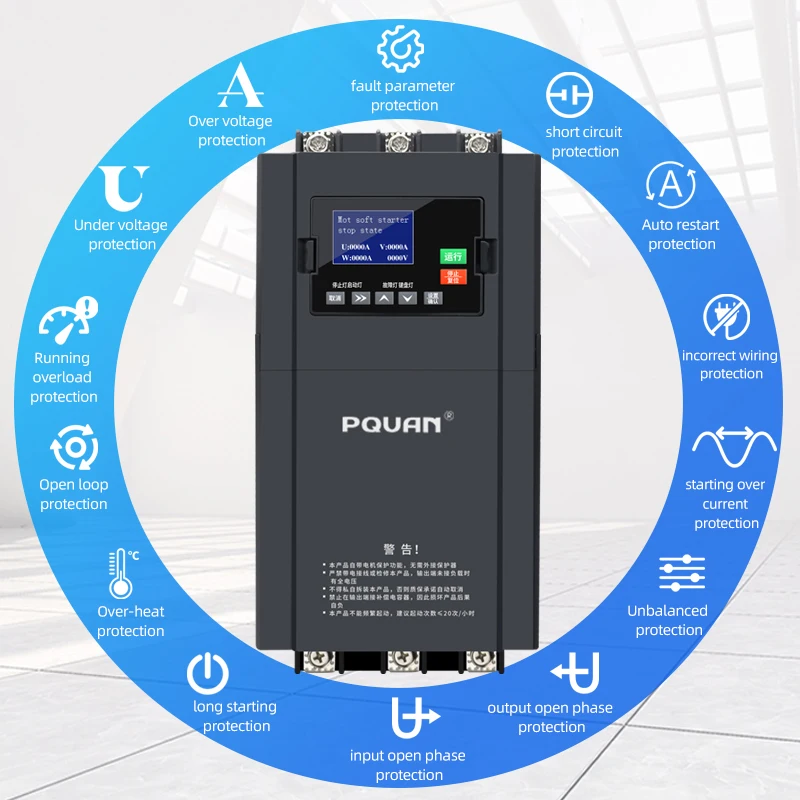
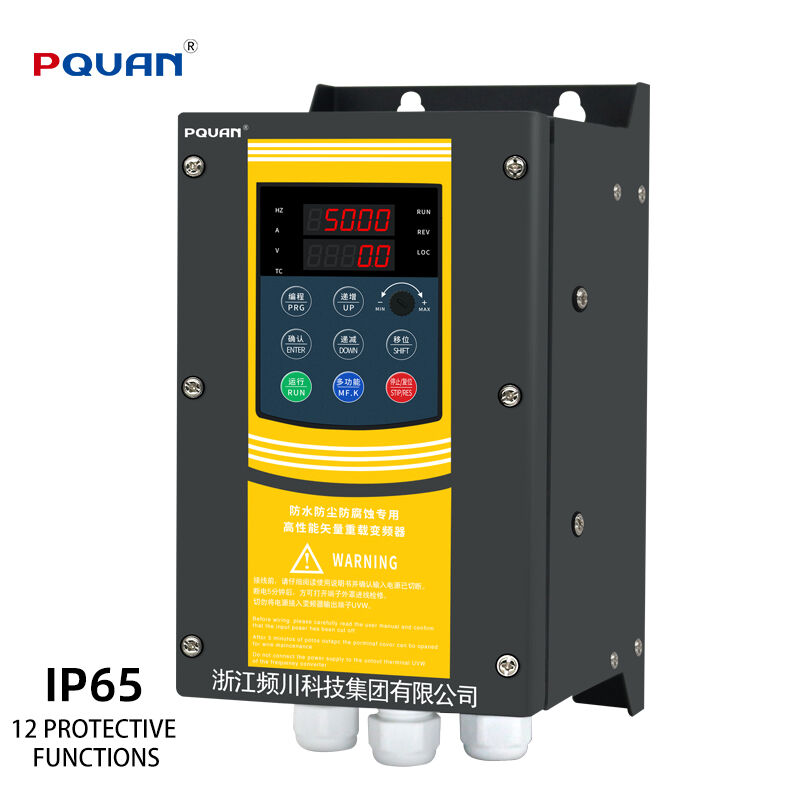
Mechanical failures represent the largest source of unplanned downtime and maintenance costs in industrial facilities. The inverter variable speed drive addresses this challenge by fundamentally changing how motors start, run, and stop, eliminating the mechanical shocks and electrical stresses that cause premature equipment failure. Traditional across-the-line motor starting subjects every component to severe mechanical shock as the motor accelerates from zero to full speed in under two seconds while drawing six to eight times normal current. This violent starting damages motor bearings, stresses shaft couplings, strains belts and chains, and creates shock loads throughout driven equipment. The inverter variable speed drive eliminates these damaging events by controlling acceleration to any desired rate, typically 10 to 60 seconds for most applications. This gentle starting reduces mechanical stress by factors of ten or more, directly extending the service life of motors, bearings, seals, and driven equipment. Bearing life particularly benefits from reduced starting stress and the ability to operate at reduced speeds when full capacity is unnecessary. Bearing fatigue follows an inverse relationship with speed, where operating at 80 percent speed more than doubles bearing life expectancy. The inverter variable speed drive enables operators to reduce speeds during light-load periods, accumulating significant extensions in bearing life. Similar benefits apply to belts, chains, gears, and all rotating components subject to wear. Vibration analysis reveals that the inverter variable speed drive operates more smoothly than fixed-speed motors, producing lower vibration amplitudes across the speed range. This smooth operation reduces fatigue in mounting structures, piping connections, and ancillary equipment. Water hammer and pressure surges, which plague pumping systems using throttling valves, disappear when an inverter variable speed drive controls pump speed directly. The elimination of these hydraulic shocks extends piping system life and reduces gasket and seal failures. Electrical stress on motor windings decreases substantially with soft starting. The high inrush currents of across-the-line starting create electromagnetic forces that mechanically stress windings and generate heat that degrades insulation. The inverter variable speed drive limits current to safe levels during starting and provides thermal protection that prevents overheating under all operating conditions. Motor insulation life approximately doubles for every 10-degree reduction in operating temperature, and the drive's protection features ensure motors never operate beyond their thermal limits. Maintenance scheduling transitions from reactive to predictive as the inverter variable speed drive provides continuous monitoring of motor current, voltage, power, and operating hours. Trending this data reveals developing problems before failures occur, allowing planned maintenance during scheduled shutdowns rather than emergency repairs during production hours.
 EN
EN