Voltage stability is the cornerstone of reliable operation for industrial machinery, commercial equipment, and even household appliances. Unstable voltage can lead to equipment malfunctions, reduced service life, overload damage, and unnecessary energy waste—issues that directly affect operational efficiency and cost control for businesses. For enterprises and users seeking a hassle-free selection process, PQUAN, a professional voltage regulator manufacturer with years of industry experience, simplifies the core logic and key steps to help you choose the right voltage regulator power without confusion.
Before diving into the specific steps, it’s crucial to grasp the core selection principle that underpins all decisions: Rated Power of Voltage Regulator ≥ Total Load Power × Starting Factor × Safety Margin. This formula is the key to avoiding mismatches, and each component will be explained in detail below. Whether you’re selecting a voltage regulator for a factory production line, a commercial building, or critical household equipment, following these steps ensures optimal performance and long-term stability.
The first and most fundamental step is to calculate the total power of all devices that will be connected to the voltage regulator. A common mistake here is confusing apparent power (measured in KVA) and active power (measured in KW)—these two metrics differ significantly depending on the type of load, and incorrect conversion will lead to wrong selection results.
We can categorize loads into two main types and calculate their total power accordingly:
Note: Don’t forget to include auxiliary equipment such as control cabinets, sensors, and power supplies in your total load calculation—omitting these can lead to insufficient rated power of the voltage regulator.
Many devices, especially inductive loads, generate inrush current during startup—this current can be several times higher than the normal operating current. If the voltage regulator’s rated power doesn’t account for this startup impact, it may trigger overload protection or even be damaged. Therefore, matching the appropriate starting factor based on the load type is essential.
Below is a clear summary of common load types and their corresponding starting factors, verified by PQUAN’s engineering team through numerous practical applications:
| Load Type | Starting Factor | Typical Examples |
| Resistive Loads | 1.2~1.5 | Lighting fixtures, electric heaters, water heaters |
| Regular Inductive Loads (Star-Delta Start) | 1.5~2.0 | Small water pumps, office fans, small conveyor belts |
| Heavy Inductive Loads (Direct Start) | 3.0~4.0 | Large air compressors, industrial motors, heavy-duty pumps |
| Impact Loads | 4.0~5.0 | Welding machines, laser cutting equipment, stamping machines |
For example, if you’re selecting a voltage regulator for a large air compressor (heavy inductive load with direct start) with a total apparent power of 50 KVA, the required power after considering the starting factor (3.0~4.0) would be 150~200 KVA.
Even after accurately calculating total load power and matching the starting factor, it’s necessary to reserve a safety margin to cope with unexpected situations such as grid voltage fluctuations, long-term continuous operation, and potential future load increases. A reasonable safety margin can significantly extend the service life of the voltage regulator and ensure stable operation under harsh conditions.
PQUAN recommends the following safety margin standards based on usage scenarios:
For instance, if the calculated power (after starting factor) is 200 KVA for a general factory scenario, the recommended rated power of the voltage regulator would be 220~240 KVA (200 KVA × 1.1~1.2).
In addition to the three core steps above, avoiding the following common mistakes can help you select the most suitable voltage regulator and save costs:
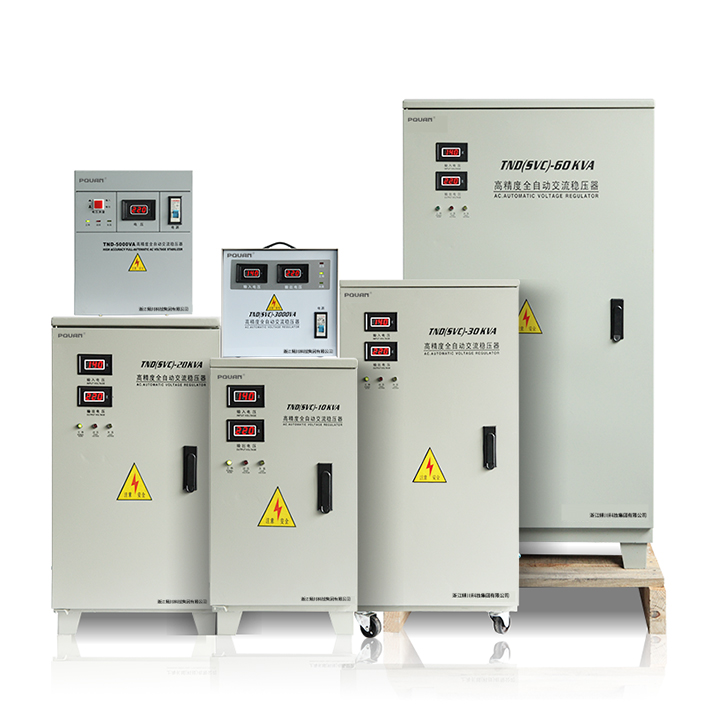
As a high-tech enterprise specializing in voltage regulators and industrial automation solutions, PQUAN has been committed to providing reliable, high-quality products and professional services to global customers for years. Our full range of voltage regulators (3KVA~2000KVA) covers all common industrial and commercial scenarios, and all products have passed international certifications such as CE, ISO, and UL, ensuring compliance with global quality standards and adaptability to complex working environments.
To help customers avoid selection troubles, PQUAN offers free professional selection services. Our team of experienced engineers will tailor the most suitable voltage regulator solution for you based on your specific load details, usage scenarios, and budget. Whether you’re in the manufacturing, construction, medical, or commercial sector, we have the expertise to meet your voltage stability needs.
PQUAN’s products are exported to more than 60 countries and regions around the world, winning widespread trust and praise from customers with stable performance, durable quality, and timely after-sales support. If you’re currently facing voltage stability issues or need help selecting a voltage regulator, feel free to contact PQUAN’s consultants—we’re always ready to serve you!
 Hot News
2026-09-16
2026-01-16
2025-08-10
2025-08-02

Zhejiang PQUAN Technology (Est.2003): Professional manufacturer of variable frequency drive, soft starters, voltage stabilizers. CE/CQC/ISO9001 certified, 2-year warranty, OEM/ODM services & online technical support.
No. 555, Zhan Cheng Road, Liushi Town, Leqing City, Zhejiang Province
Copyright © 2026 ZHEJIANG PQUAN Technology Co.Ltd. All Rights Reserved. Privacy Policy
 EN
EN