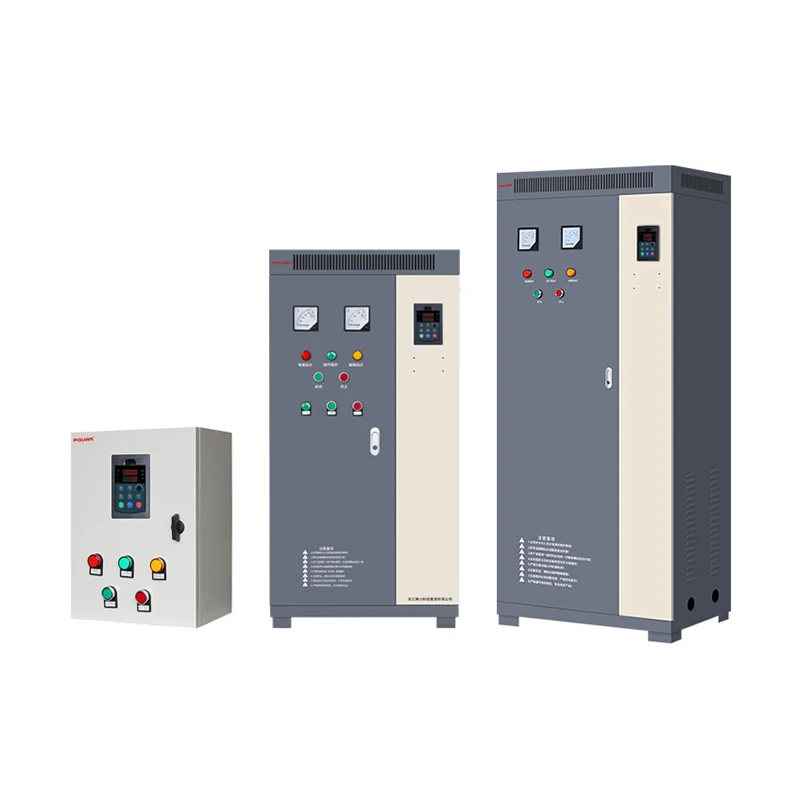
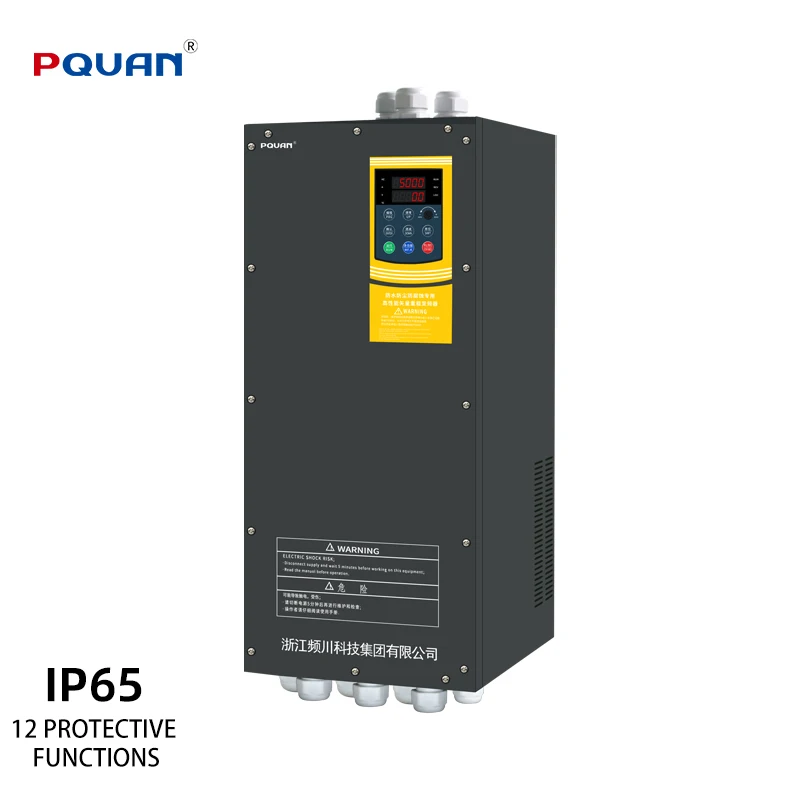
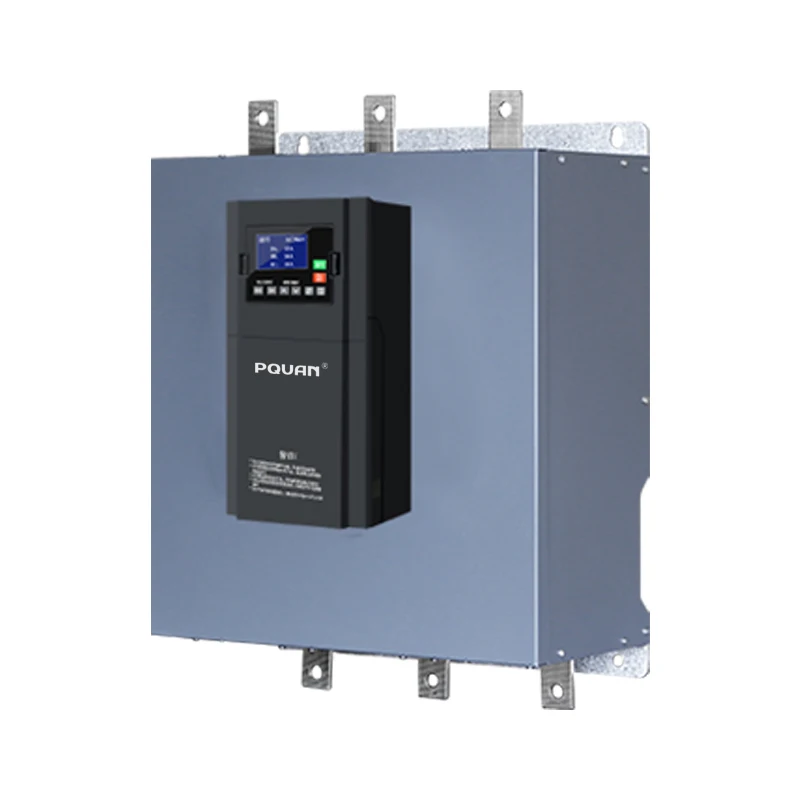
Selecting the correct variable frequency drive (VFD), also commonly referred to as an inverter, is a critical decision that directly impacts motor performance, energy efficiency, system reliability, and long-term operational costs. A properly matched VFD ensures stable operation, extends equipment lifespan, reduces energy consumption, and minimizes downtime. An undersized or poorly matched drive will lead to overloads, overheating, frequent faults, and even motor or drive failure. Conversely, an oversized drive increases initial investment, creates unnecessary energy waste, and complicates control logic. This guide provides a comprehensive, step-by-step framework to help engineers, technicians, and decision-makers select the optimal VFD model for any industrial or commercial application.
1. Understand the Core Purpose and Application Scope
Before diving into technical parameters, clarify the fundamental objectives of using a VFD. Most applications fall into one or more of the following categories:
- Speed control: Adjust motor speed to match process requirements, replacing mechanical valves, gears, or dampers.
- Energy saving: Reduce power consumption in variable-load applications such as fans, pumps, and compressors.
- Soft starting & stopping: Eliminate mechanical shock, water hammer, and grid current surges.
- Torque control: Provide precise or high starting torque for heavy-load equipment.
- Process automation: Integrate with PLC, HMI, or SCADA systems for centralized monitoring and control.
Common application scenarios include:
- Light duty: Fans, centrifugal pumps, blowers, general conveyors.
- Medium duty: Mixers, extruders, general machinery.
- Heavy duty: Crushers, hoists, cranes, machine tools, rolling mills, positive displacement pumps.
Each category demands distinct performance characteristics from the VFD, so defining the application type is the first and most foundational step.
2. Collect Complete Motor Nameplate Parameters
The VFD is a controller designed specifically for electric motors; therefore, all selection must start with accurate motor data. Relying solely on power (kW/HP) is a common and costly mistake. The critical motor parameters are:
- Rated power (kW/HP)
- Rated voltage (V)
- Rated current (A) – the most important parameter
- Rated frequency (Hz)
- Rated speed (rpm)
- Motor type: Asynchronous induction motor, permanent magnet synchronous motor (PMSM), etc.
- Number of poles
- Insulation class
Key Rule: Prioritize Current Over Power
Two motors with identical power ratings can have significantly different full-load currents (FLA) depending on speed, efficiency, power factor, and manufacturer. Always select a VFD whose continuous output current is greater than or equal to the motor’s rated current. If the motor operates at high torque or low speed for extended periods, the VFD current rating must be further increased.
Voltage Matching
The VFD input voltage must match the site power supply:
- Low-voltage drives: 200V, 230V, 400V, 480V (three-phase or single-phase)
- Medium-voltage drives: 3kV, 6kV, 10kV (for high-power motors above 200kW)
The VFD output voltage range must also be compatible with the motor’s rated voltage to avoid insufficient torque or insulation stress.
3. Analyze Load Characteristics and Torque Requirements
Load type determines the VFD’s overload capacity, control mode, and torque performance. The three primary load profiles are:
3.1 Variable Torque Loads
Typical applications: Centrifugal fans, centrifugal pumps, blowers.
- Torque increases with the square of speed; power increases with the cube of speed.
- Low starting torque; no significant overload demand.
- VFD requirements: Standard overload capacity (110%–120% for 1 minute), energy-saving mode, V/F control.
3.2 Constant Torque Loads
Typical applications: Conveyors, compressors, mixers, extruders, positive displacement pumps.
- Torque remains stable across the speed range; power increases linearly with speed.
- Requires high starting torque and continuous overload capability.
- VFD requirements: 150% overload for 1 minute, sensorless vector or closed-loop vector control.
3.3 Constant Power Loads
Typical applications: Machine tools, winders, unwinders, rolling mills.
- Torque decreases as speed increases; power remains constant.
- Requires wide speed regulation and strong field-weakening control.
- VFD requirements: High-performance vector control, wide frequency output range.
Overload Capacity Selection
- Light duty: 120% overload for 1 minute
- Standard duty: 150% overload for 1 minute
- Heavy duty: 180%–200% overload for a few seconds
For frequent starting, stopping, reversing, or impact loads, always choose a heavy-duty VFD or increase the model size by one grade.
4. Calculate VFD Capacity with Safety Margins
After matching motor current and analyzing load type, calculate the required VFD capacity and apply appropriate safety margins.
Basic Formula
- Confirm motor full-load current (FLA) from nameplate.
- Select VFD with continuous output current ≥ motor FLA.
- Apply a safety margin based on environment and load:
- Normal environment, light load: 10% margin
- High temperature, high altitude, heavy load, frequent starting: 20%–30% margin
Example
A 30kW, 400V three-phase motor has a rated current of 58A and is used in a conveyor (constant torque, heavy duty).
- Minimum VFD output current: 58A × 1.2 (safety margin) = 69.6A
- Select a VFD model with rated output current ≥ 70A.
Special Conditions That Require Oversizing
- High altitude (1000m): Air density decreases, reducing heat dissipation; derate VFD by 1% per 100m above 1000m.
- High ambient temperature (40°C): Thermal derating applies.
- Long motor cables (50m): Increased voltage drop and leakage current; use output reactors and oversized VFD.
- High-speed motors (50Hz/60Hz): Increased iron loss and current.
- Multi-motor parallel operation: Sum the total rated current of all motors and add 10%–20% margin.
5. Choose the Appropriate Control Method
Modern VFDs offer multiple control algorithms to balance cost and performance. Select based on precision needs:
5.1 V/F Control (Volts per Hertz)
- Features: Simple structure, low cost, high stability, suitable for multiple motors.
- Performance: Low speed stability and torque accuracy.
- Applications: Fans, pumps, general-purpose equipment with low precision requirements.
5.2 Sensorless Vector Control (SVC)
- Features: High starting torque (150% at 0.5Hz), good speed accuracy, no encoder needed.
- Performance: Balances performance and cost.
- Applications: Conveyors, mixers, compressors, etc.
5.3 Closed-Loop Vector Control (with encoder)
- Features: Ultra-high precision, full torque at zero speed, rapid dynamic response.
- Applications: Machine tools, cranes, hoists, rolling mills, high-precision production lines.
5.4 Direct Torque Control (DTC)
- Features: Extremely fast torque response, simple parameter tuning.
- Applications: High-dynamic performance in metallurgy, lifting, extrusion.
Rule of thumb: Choose the simplest control method that meets the process requirements to reduce cost and complexity.
6. Evaluate Environmental Conditions and Protection Level
The VFD’s protection rating and environmental adaptability directly determine its service life.
Key Environmental Factors
- Ambient temperature: Recommended range -10°C to +40°C; avoid direct sunlight and heat sources.
- Humidity: 95% RH (non-condensing); prevent moisture and corrosive gas.
- Altitude: Derate above 1000m.
- Pollution: Dust, metal powder, oil mist, corrosive vapors.
- Vibration and shock: Especially in mobile or heavy industrial settings.
IP Rating Selection
- IP20: Indoor panel installation, clean environment, low dust.
- IP55/IP65: Fully protected against dust and water jets; for harsh environments outdoors or in dusty workshops.
For corrosive or high-dust environments, choose a specialized VFD with coating protection or add a sealed cabinet with air conditioning/ventilation.
7. Check Auxiliary Functions and System Compatibility
Beyond basic drive performance, verify compatibility with the automation system and required accessories:
Essential Functions
- PID control: For closed-loop systems (pressure, flow, temperature).
- Multi-step speed control: Timing or program-controlled speed variation.
- Built-in PLC: Simple logic control without external controller.
- Energy-saving mode: Optimized for variable torque loads.
- Fault recording and monitoring: Overcurrent, overvoltage, undervoltage, overheating, phase loss, etc.
Communication Interfaces
To integrate into intelligent systems:
- Standard: Modbus-RTU, RS485
- Industrial: Profibus-DP, DeviceNet, Ethernet-IP, PROFINET, EtherCAT
Ensure the VFD supports the protocol used by the on-site PLC or host system.
Necessary Accessories
- Input reactor: Suppresses harmonics, protects the VFD from grid surges.
- Output reactor: Reduces dv/dt, protects motor insulation, extends cable distance.
- DC reactor: Improves power factor and reduces harmonic distortion.
- Brake unit + brake resistor: For quick stopping, overhauling loads (cranes, elevators).
- EMI filter: Reduces electromagnetic interference for sensitive electronic equipment.
8. Confirm Certifications, Brand, and After-Sales Support
Industrial equipment requires long-term reliability; do not base selection solely on price.
Certifications
Ensure compliance with international and regional standards:
- CE, UL, CSA
- ISO9001
- Industry-specific certifications (explosion-proof, marine, mining)
Brand and Reliability
- Choose manufacturers with a proven track record in similar applications.
- Review mean time between failures (MTBF) and design life.
- Prefer brands with local service and spare parts availability.
Total Cost of Ownership (TCO)
Consider not only the purchase price but also:
- Energy consumption over 5–10 years
- Maintenance cost
- Downtime risk
-
Service and technical support
A slightly more expensive VFD with high efficiency and reliability often delivers a much lower TCO.
9. Avoid Common Selection Mistakes
Many system failures stem from avoidable errors during selection:
-
Only looking at kW/HP and ignoring rated current: The single most common error.
-
Insufficient safety margin: Underestimates high temperature, altitude, or load fluctuations.
-
Mismatched control method: Using V/F control for high-torque applications leads to insufficient torque.
-
Forgetting special loads: Cranes, centrifuges, and high-speed machines need dedicated drive models.
-
Ignoring environmental factors: Using IP20 drives in dusty or humid environments leads to early failure.
-
Omitting necessary accessories: Missing reactors or brake units causes drive faults and motor damage.
-
Incompatible communication: Cannot connect to the automation system, requiring retrofits.
10. Step-by-Step VFD Selection Summary
Follow this standardized workflow for reliable results:
- Collect complete motor nameplate data (focus on rated current).
- Define application type and load profile (variable torque, constant torque, constant power).
- Calculate required VFD current and add safety margin (10%–30%).
- Select overload capacity and control mode (V/F, SVC, closed-loop vector).
- Check voltage, phase, and frequency matching with the power supply.
- Evaluate environment and select IP rating and cooling method.
- Confirm communication, PID, and other required functions.
- List necessary accessories (reactors, brake resistors, filters).
- Verify certifications, brand reliability, and after-sales support.
- Finalize model and recheck all parameters before ordering.
Conclusion
Selecting the right VFD model is a systematic process that integrates motor characteristics, load requirements, environmental conditions, and system compatibility. By following the principles and steps outlined in this guide, you can avoid common errors, ensure stable and efficient operation, reduce energy consumption, lower maintenance costs, and maximize the return on investment.
Always remember: The best VFD is not the most powerful or expensive one, but the one that perfectly matches your motor and application. When in doubt, consult the manufacturer’s technical team and provide full application details to receive a professional, customized recommendation.
With proper selection, installation, and commissioning, a VFD will deliver years of reliable service, making it an indispensable component of modern industrial and commercial drive systems.

 Hot News
 EN
EN