 EN
EN

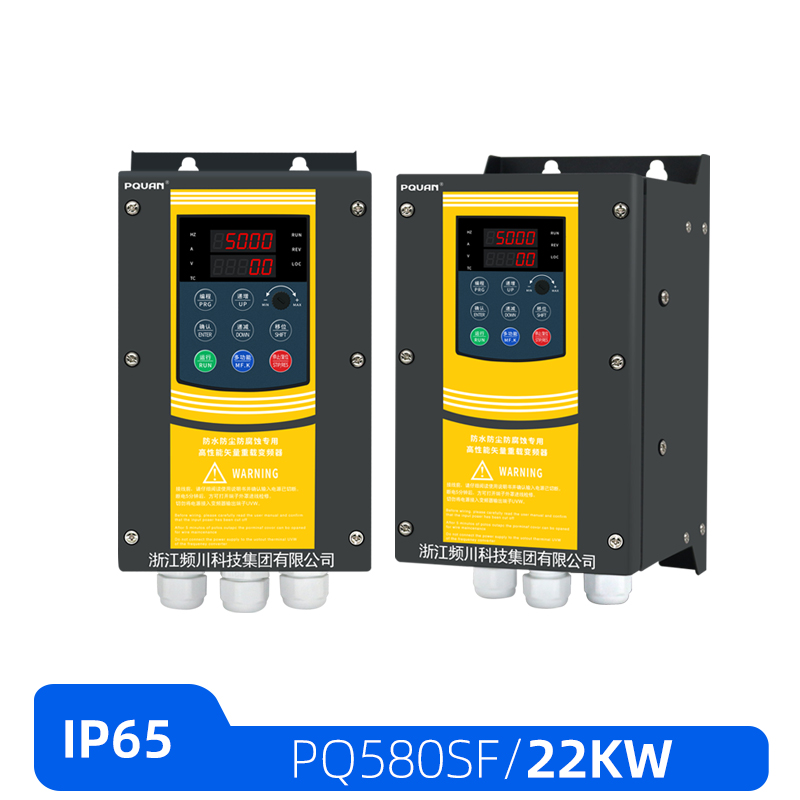
An ac drive is one of the most strategically important components in modern industrial motor control. Whether you are running a large-scale manufacturing facility, a commercial HVAC system, or a water treatment plant, understanding what an ac drive is and exactly how it governs the behavior of AC motors can have a direct and measurable impact on energy efficiency, equipment longevity, and operational costs. Many engineers and plant managers use the term interchangeably with 'variable frequency drive' or 'VFD,' and while these terms are closely related, the broader category of ac drive covers the full spectrum of devices designed to regulate alternating current supplied to electric motors.
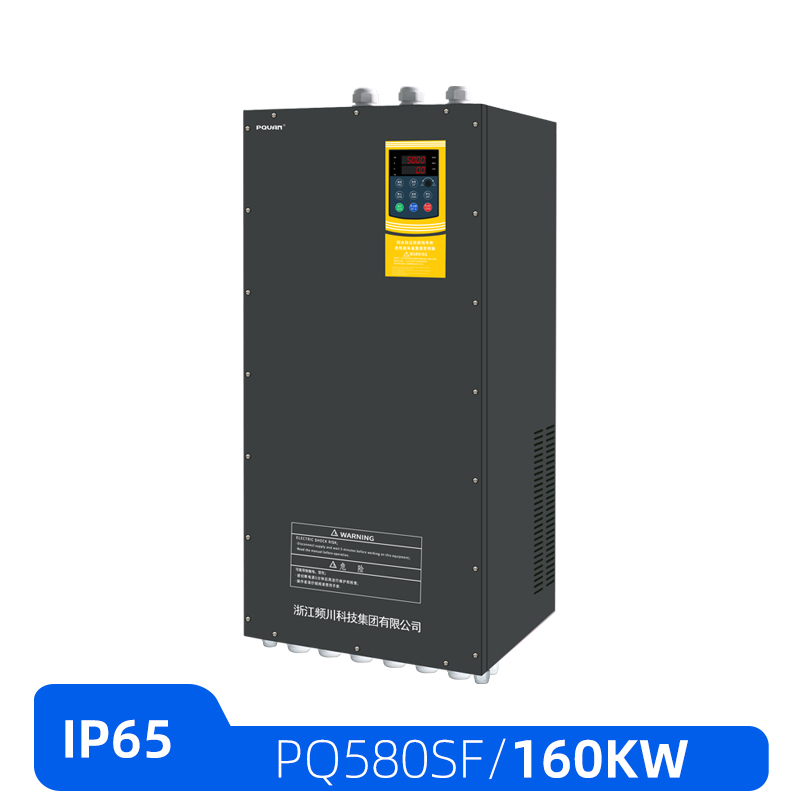
This article explores the definition, internal architecture, operating principles, and efficiency advantages of an ac drive in practical industrial contexts. Rather than offering a surface-level overview, it breaks down each functional stage of the device and explains precisely how it interacts with an AC motor to deliver precise speed, torque, and power control. By the end, you will have a comprehensive understanding of what an ac drive is, how it works mechanically and electrically, and why deploying one is a sound engineering and financial decision for motor-driven applications.
Defining the AC Drive in Industrial Context
Core Identity and Classification
An ac drive is an electronic power conversion device that adjusts the frequency and voltage of the electrical supply delivered to an AC induction motor or synchronous motor. By changing these two parameters, the device gains full authority over the motor's rotational speed without physically altering the motor's mechanical structure. This is a fundamentally different approach compared to older methods such as resistance-based speed control or mechanical gearboxes, which dissipate energy rather than optimizing it.
The ac drive belongs to a broader family of power electronics devices sometimes called adjustable speed drives or variable speed drives. However, the specific term 'ac drive' is most precise when referring to devices designed exclusively for alternating current motor control, as opposed to DC drives that manage direct current motors. In industrial classification, an ac drive typically covers configurations for single-phase and three-phase systems, with power ratings ranging from fractional kilowatts to several hundred kilowatts or beyond.
Modern ac drive units are built around solid-state electronics, microprocessors, and digital signal processors that allow extremely fine-grained control over output waveforms. This digital foundation distinguishes contemporary ac drive technology from the analog systems of earlier decades, enabling features such as real-time feedback loop control, communication with SCADA systems, and programmable ramp-up and ramp-down sequences.
Key Terminology Associated with AC Drives
Understanding an ac drive properly requires familiarity with several related terms. 'Frequency' in this context refers to the number of electrical cycles per second, measured in Hertz, which directly corresponds to the synchronous speed of the AC motor. A standard 50 Hz or 60 Hz supply can be modulated by an ac drive to deliver any frequency within its programmable range, giving users full control over motor speed.
The concept of 'V/Hz ratio' is central to most ac drive strategies. To maintain adequate magnetic flux within the motor, the drive must adjust voltage in proportion to frequency. If frequency drops without a corresponding voltage reduction, the motor core can saturate and overheat. The ac drive manages this ratio automatically, protecting the motor while delivering the requested speed.
Another important term is 'torque control,' which refers to the ac drive's ability to regulate not just speed but also the rotational force that the motor applies to its mechanical load. Advanced ac drive units offer vector control or direct torque control modes that deliver superior torque performance at low speeds, a critical requirement for applications such as hoists, extruders, and paper mills.
Internal Architecture of an AC Drive
The Rectifier Stage
Every ac drive begins its conversion process with a rectifier stage, which converts the incoming AC mains supply into direct current. In most industrial-grade ac drive units, this is accomplished using a full-wave bridge rectifier composed of power diodes or, in more advanced designs, controlled thyristors. The resulting DC voltage is not perfectly smooth but contains ripple that must be addressed in the next stage.
The quality of rectification matters significantly for the downstream performance of the ac drive. A poorly filtered DC bus can introduce harmonic distortions back into the power supply network, which may interfere with other sensitive equipment sharing the same electrical infrastructure. High-quality ac drive designs incorporate front-end line reactors or active front-end rectifiers to minimize harmonic injection and comply with grid quality standards such as IEEE 519.
The DC Bus and Capacitor Bank
After rectification, the ac drive stores energy in a DC bus, which consists of a bank of high-capacitance capacitors. This energy reservoir serves two purposes: it smooths the rectified DC voltage to provide a stable supply for the inverter stage, and it acts as a buffer that absorbs regenerative energy when the motor decelerates and acts as a generator momentarily. The DC bus voltage in a typical 380V three-phase ac drive is approximately 540 VDC under normal operating conditions.
The health of the capacitor bank is a critical maintenance consideration for any ac drive installation. Electrolytic capacitors degrade over time due to heat and electrical stress, and their effective capacitance determines the drive's ability to handle transient loads and regenerative events. Leading-edge ac drive designs use aluminum electrolytic capacitors rated for extended operational life and incorporate monitoring circuits that track capacitor health in real time.
The Inverter Stage and PWM Control
The inverter stage is the functional heart of the ac drive and the component most directly responsible for controlling the AC motor. It consists of a set of insulated gate bipolar transistors, commonly known as IGBTs, arranged in a three-phase bridge configuration. By switching these transistors on and off at precise intervals, the ac drive synthesizes a simulated AC output voltage with a fully controllable frequency and amplitude.
The switching strategy used by virtually all modern ac drive designs is called pulse width modulation, or PWM. In PWM control, the IGBT switches operate at a high carrier frequency, typically between 2 kHz and 16 kHz, and the width of each voltage pulse is varied to approximate a smooth sinusoidal waveform. The motor's own inductance acts as a natural low-pass filter, smoothing the pulsed voltage into a near-sinusoidal current that drives the motor efficiently.
The PWM carrier frequency is an important tuning parameter in any ac drive installation. Higher carrier frequencies produce smoother output waveforms and quieter motor operation but also generate more heat within the ac drive itself, requiring derating. Lower carrier frequencies are more thermally efficient for the drive but can cause audible motor noise. Most ac drive units allow the user to select carrier frequency as part of the commissioning process.
How an AC Drive Controls Motor Speed and Torque
Scalar Control Mode
The simplest operating mode available in an ac drive is scalar control, also referred to as V/Hz control. In this mode, the drive maintains a fixed ratio between output voltage and output frequency across the entire speed range. This approach is straightforward to configure and works reliably for applications where precise dynamic torque control is not required, such as centrifugal pumps, fans, and simple conveyor systems.
Scalar control in an ac drive has limitations at very low speeds, where the fixed V/Hz ratio can result in reduced magnetic flux and weakened torque output. Many ac drive units address this with a 'torque boost' feature that elevates the voltage slightly at low frequencies to compensate. While not as precise as vector control, scalar mode ac drive operation is computationally simple and highly robust, making it a practical choice for the vast majority of variable-speed pump and fan applications.
Vector Control Mode
Vector control, also called field-oriented control, is a more advanced algorithm available in higher-specification ac drive products. In this mode, the drive decomposes the motor current into two mathematically orthogonal components: one that controls magnetic flux and one that controls torque. By independently regulating these two components, the ac drive achieves much faster torque response and more accurate speed regulation than scalar control can offer.
There are two variants of vector control used in ac drive systems: sensorless vector control and closed-loop vector control. Sensorless vector control estimates rotor speed and flux using mathematical models built into the ac drive's processor, eliminating the need for a physical encoder on the motor shaft. Closed-loop vector control uses actual feedback from an encoder for the highest precision, and is used in demanding applications such as winders, cranes, and servo-like positioning systems.
The selection between scalar and vector mode in an ac drive should be driven by the application's dynamic requirements. For constant-speed fans and pumps, scalar control from an ac drive is entirely adequate. For applications demanding precise torque at zero speed or rapid acceleration and deceleration, vector control from the ac drive becomes not just advantageous but necessary for reliable operation.
Energy Efficiency Advantages of Using an AC Drive
The Affinity Laws and Variable Speed Savings
One of the most compelling reasons to deploy an ac drive on pump and fan applications is the physics described by the affinity laws. These fluid dynamics principles state that power consumption in a centrifugal pump or fan is proportional to the cube of the shaft speed. This means that reducing motor speed by just 20 percent using an ac drive reduces power consumption by approximately 49 percent, a dramatic energy saving that translates directly into reduced electricity costs.
In contrast, traditional speed regulation methods such as throttling valves on pumps or inlet vanes on fans waste energy by creating artificial resistance while keeping the motor running at full speed. An ac drive eliminates this inefficiency by simply slowing the motor down to match the actual demand. Over a full operating year, this difference in energy consumption can represent savings of tens of thousands of kilowatt-hours per drive installation, with payback periods often measured in months rather than years.
Soft Starting and Mechanical Stress Reduction
Beyond the energy savings from variable speed operation, an ac drive also provides significant efficiency gains through its controlled start and stop sequences. When an AC motor starts across-the-line without a drive, it draws an inrush current that can be six to eight times its rated full-load current. This current spike stresses the motor windings, the power supply infrastructure, and any connected mechanical components such as belts, couplings, and gearboxes.
An ac drive eliminates this inrush current by gradually ramping up the output frequency and voltage from zero. The motor accelerates smoothly, with current limited to a safe programmable level, typically 150 percent of rated current or less. This soft-start capability not only reduces wear on the motor but also prolongs the life of all connected mechanical equipment, reducing maintenance costs and unplanned downtime over the system's operational life.
Similarly, the ac drive's controlled deceleration ramp prevents the mechanical shock that occurs when a loaded motor stops abruptly. In applications such as conveyor belts carrying fragile materials or elevators, the smooth stop profile delivered by an ac drive is not just an efficiency feature but a safety and product quality requirement.
Application Scenarios and Selection Criteria for AC Drives
Industries and Use Cases Where AC Drives Deliver Maximum Value
The ac drive finds application across a remarkably broad range of industries precisely because AC induction motors are the dominant prime mover in industrial and commercial settings worldwide. In the water and wastewater sector, ac drive units on pumping stations enable flow modulation in direct response to demand, eliminating the energy waste and pressure transients associated with on-off motor switching. In HVAC systems, ac drive control of chiller compressors, cooling tower fans, and air handling units is now considered standard practice in energy-efficient building design.
Manufacturing environments deploy the ac drive extensively in applications ranging from injection molding machines and extruders to CNC machine tool spindles and robotic axis drives. The food and beverage industry relies on ac drive technology to control mixing, filling, and conveying equipment with the speed accuracy and hygiene compliance that the sector demands. In the oil and gas sector, ac drive systems manage ESP pumps, pipeline compressors, and drilling rig top drives under the demanding environmental and safety conditions that characterize that industry.
Criteria for Selecting the Right AC Drive
Choosing the correct ac drive for a given application requires careful evaluation of several technical parameters. The first is the power rating, which must be matched to the motor's kilowatt or horsepower rating while accounting for any overload requirements during acceleration or process peaks. Most ac drive datasheets specify a 'normal duty' current rating and a 'heavy duty' current rating, and the correct rating must be selected based on the load type.
The supply voltage and phase configuration are equally critical. An ac drive rated for three-phase 380V input is not interchangeable with one rated for single-phase 220V input without engineering review. The output frequency range, control mode availability, communication protocol support, and environmental protection rating of the ac drive enclosure must all be matched to the installation's requirements before procurement.
Thermal management is another often-overlooked selection criterion. An ac drive generates heat during operation, and its enclosure must be sized and ventilated appropriately, or the drive must be panel-mounted with sufficient clearance and airflow. Undersized thermal management is a leading cause of premature ac drive failure and should be addressed rigorously at the design stage rather than corrected after installation.
FAQ
What is the difference between an ac drive and a VFD?
The terms are often used interchangeably in industrial practice, but technically an ac drive is the broader category, referring to any device that controls an AC motor's speed and torque through power electronics. A VFD, or variable frequency drive, is the most common type of ac drive and specifically achieves speed control by varying the output frequency. All VFDs are ac drives, but some ac drive designs, such as soft starters or cycloconverters, do not operate by frequency variation alone.
Can an ac drive be used with any AC motor?
Most standard AC induction motors are compatible with an ac drive, but certain considerations apply. Motors operated by an ac drive at low speeds for extended periods may require additional forced cooling because the motor's internal fan is also running slowly. Additionally, older motors with thin insulation may be sensitive to the voltage spikes associated with PWM output from an ac drive. For demanding applications, motors specifically rated as 'inverter-duty' or 'drive-rated' are recommended to ensure long service life when paired with an ac drive.
How does an ac drive reduce energy consumption in pump applications?
In pump applications, an ac drive reduces energy consumption by allowing the pump motor to run at a speed that matches actual flow demand rather than always running at full speed and throttling output with a valve. Because pump power consumption follows the cube law relative to speed, even modest speed reductions produce large energy savings. A pump running at 80 percent of full speed through an ac drive uses only about 51 percent of the power it would consume at full speed, delivering the same flow at dramatically lower energy cost.
What protection features does a modern ac drive provide?
A modern ac drive incorporates multiple layers of protection for both the drive itself and the connected motor. Typical protections include overcurrent protection that prevents damaging current spikes during acceleration or overload, overvoltage and undervoltage protection that shuts down the drive safely if the supply voltage moves outside acceptable limits, motor thermal overload protection based on calculated I²t heating, short-circuit protection within the drive's power stage, and earth fault detection. Many ac drive units also include communications-based diagnostics that allow remote monitoring and predictive maintenance alerts before failures occur.