Industrial VFD Solutions: Advanced Variable Frequency Drives for Enhanced Motor Control and Energy Efficiency

All Categories
Get a Quote
%}

Get a Free Quote

Our representative will contact you soon.
Email
Name
Company Name
Message
0/1000

industrial vfd

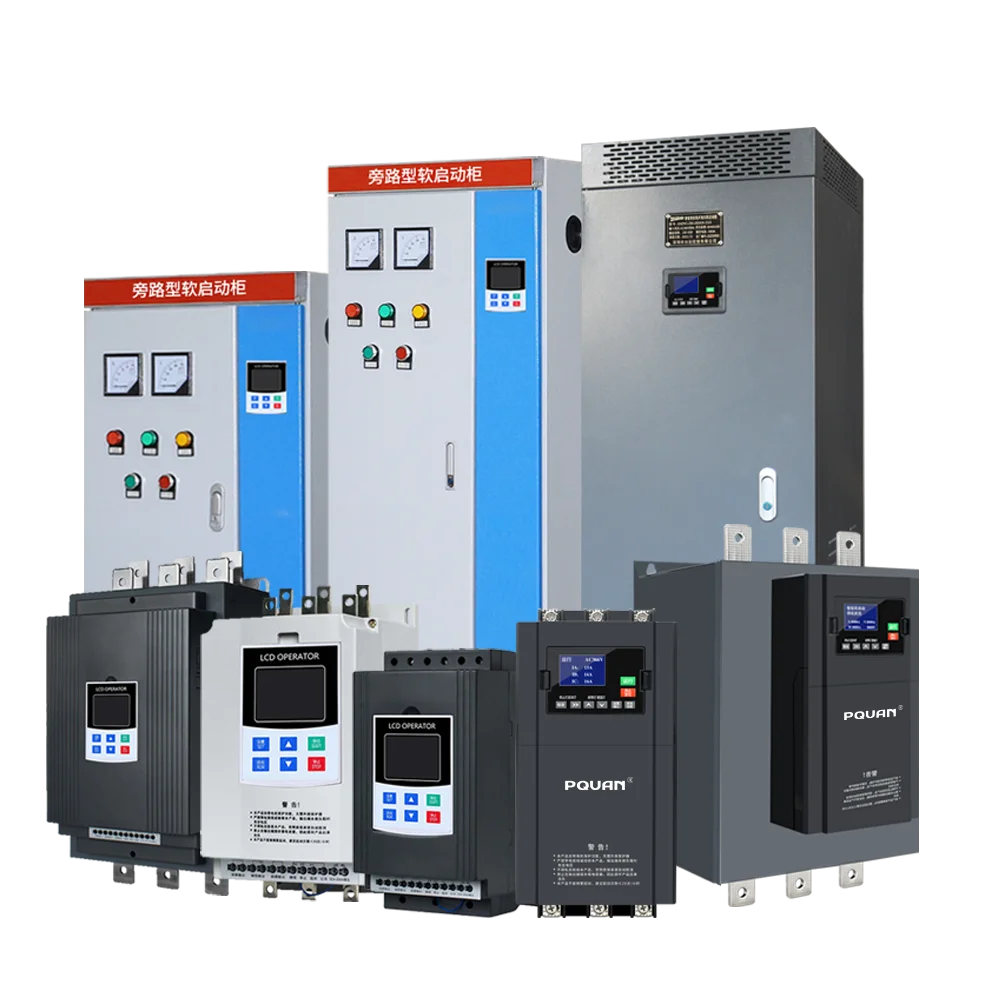
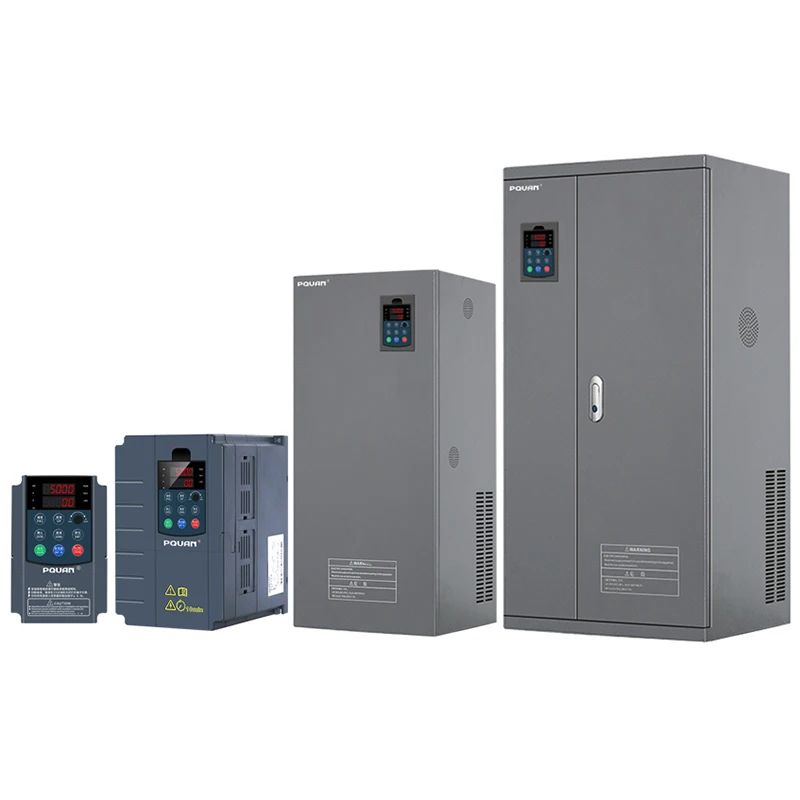
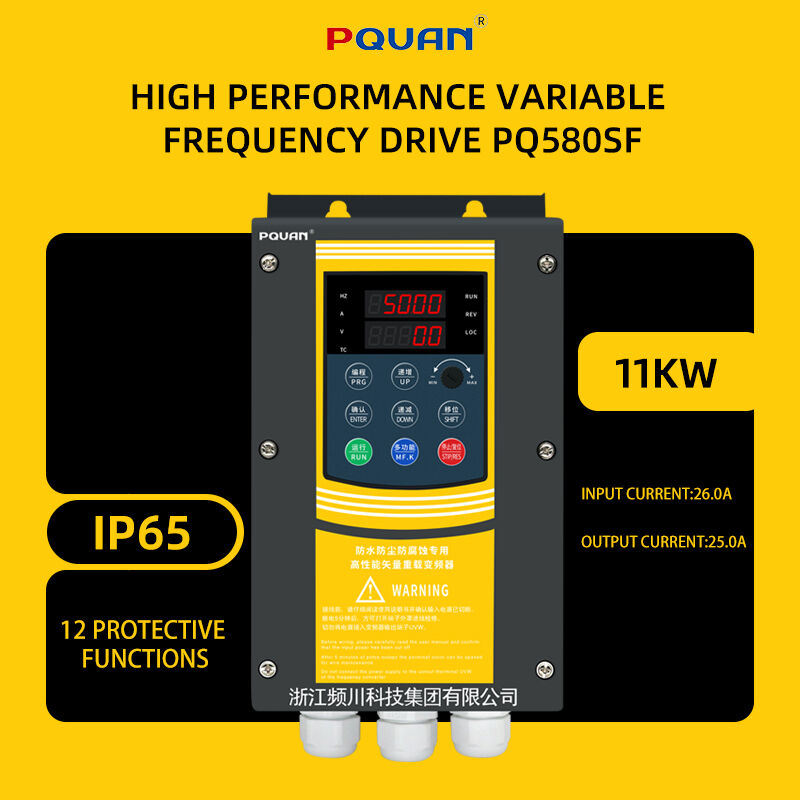
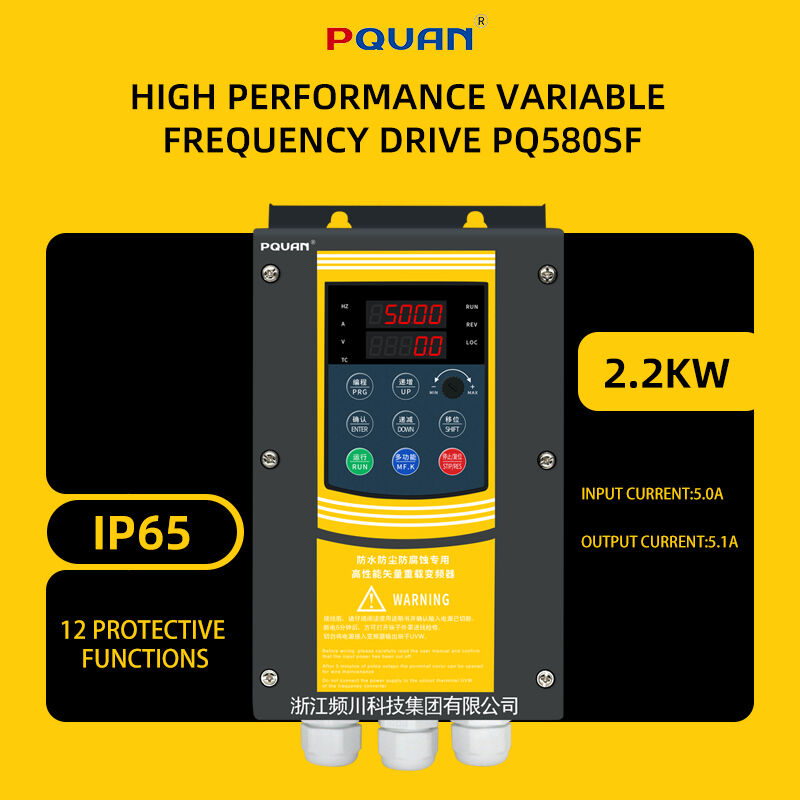
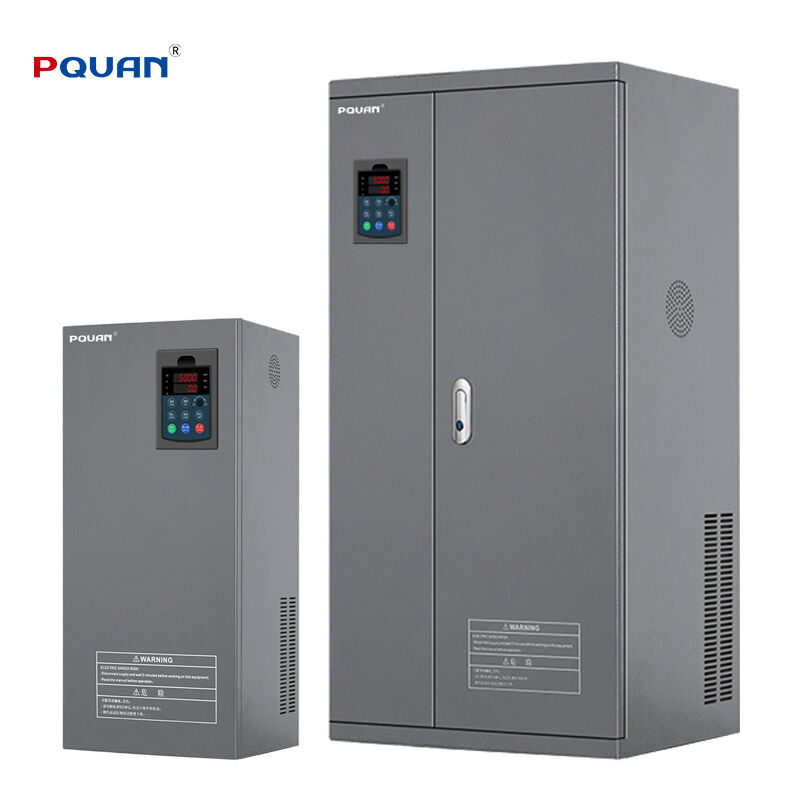
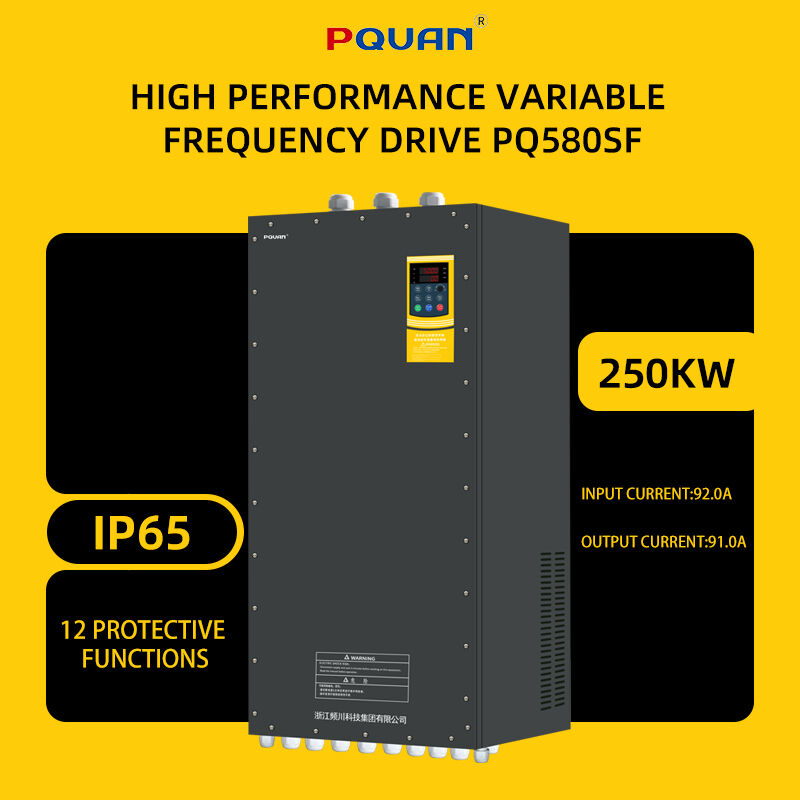
An industrial VFD (Variable Frequency Drive) represents a sophisticated power electronics device that controls the speed and torque of alternating current (AC) motors by varying the frequency and voltage supplied to the motor. This advanced technology serves as the backbone of modern industrial automation, providing precise motor control across diverse manufacturing environments. The industrial VFD converts incoming AC power into direct current (DC) through a rectifier circuit, then reconverts it back to AC with adjustable frequency and voltage through an inverter section. This process enables operators to achieve optimal motor performance while maintaining energy efficiency. The main functions of an industrial VFD encompass speed regulation, torque control, and power management. These drives offer smooth acceleration and deceleration capabilities, eliminating mechanical stress on connected equipment. Advanced models feature built-in protection mechanisms against overcurrent, overvoltage, undervoltage, and overheating conditions. Modern industrial VFD units incorporate microprocessor-based control systems that support various communication protocols including Modbus, Ethernet, and Profibus for seamless integration with automation networks. The technological features include pulse width modulation (PWM) technology for precise motor control, regenerative braking capabilities that recover energy during deceleration, and programmable logic functions that eliminate the need for external control devices. Applications span across numerous industries including manufacturing, water treatment, HVAC systems, conveyor systems, pumps, fans, compressors, and material handling equipment. The industrial VFD technology has revolutionized process control by enabling variable speed operation where fixed-speed motors were previously used, resulting in significant operational improvements and cost savings across industrial sectors.

Popular Products

Industrial VFD systems deliver substantial energy savings by matching motor speed precisely to application requirements rather than running motors at constant speeds. This intelligent speed control reduces energy consumption by up to 50 percent in many applications, translating directly to lower electricity bills and reduced operational costs. The financial benefits extend beyond energy savings as industrial VFD technology eliminates the need for mechanical speed control devices such as throttle valves, dampers, and gear reducers, reducing initial equipment costs and ongoing maintenance expenses. Operational flexibility represents another significant advantage, as industrial VFD units allow operators to adjust motor speeds instantly without stopping equipment or making mechanical changes. This capability enables real-time process optimization and improves product quality through precise control of production parameters. Equipment longevity increases dramatically when using industrial VFD systems because soft-start capabilities eliminate the mechanical shock associated with across-the-line motor starting. Traditional direct-on-line starting subjects motors and driven equipment to severe mechanical stress, leading to premature bearing failure, coupling damage, and reduced equipment lifespan. The controlled acceleration and deceleration provided by industrial VFD technology protects mechanical components and extends maintenance intervals. Process control accuracy improves significantly with industrial VFD implementation, enabling manufacturers to maintain consistent product quality and reduce waste. The ability to precisely control motor speed allows for better synchronization between multiple process stages and improved coordination of production line operations. Maintenance requirements decrease substantially because industrial VFD systems reduce mechanical wear on motors, pumps, fans, and other driven equipment. The built-in diagnostic capabilities of modern industrial VFD units provide early warning of potential problems, enabling predictive maintenance strategies that prevent unexpected downtime. Power factor correction capabilities improve electrical system efficiency and reduce demand charges from utility companies. Network connectivity features allow industrial VFD systems to integrate seamlessly with plant-wide automation systems, enabling centralized monitoring and control that improves operational efficiency and reduces labor costs.

Latest News

Pakistani Customers Visit PQUAN for Inspection and Exchange

09

Feb

Pakistani Customers Visit PQUAN for Inspection and Exchange

View More
How to Choose Voltage Regulator Power: A Concise Guide for Industrial & Commercial Users

23

Jan

How to Choose Voltage Regulator Power: A Concise Guide for Industrial & Commercial Users

View More
A Complete Guide to Selecting the Right Variable Frequency Drive (VFD) Model

03

Mar

A Complete Guide to Selecting the Right Variable Frequency Drive (VFD) Model

View More

Get a Free Quote

Our representative will contact you soon.
Email
Name
Company Name
Message
0/1000

industrial vfd

Advanced Energy Management and Cost Reduction

Advanced Energy Management and Cost Reduction

The energy management capabilities of industrial VFD technology represent perhaps the most compelling benefit for manufacturing facilities seeking to reduce operational expenses while improving environmental sustainability. Unlike traditional motor control methods that waste significant energy through throttling and mechanical speed reduction, industrial VFD systems achieve speed control by electronically adjusting the frequency and voltage supplied to AC motors. This approach eliminates energy waste associated with fixed-speed operation and mechanical control devices. In pump applications, for example, reducing motor speed by just 20 percent through industrial VFD control can result in energy savings of nearly 50 percent due to the cubic relationship between speed and power consumption. Manufacturing facilities typically see return on investment within 12 to 24 months through reduced electricity costs alone. The energy efficiency gains multiply across multiple motor applications within a facility, creating substantial cumulative savings. Modern industrial VFD units incorporate power factor correction capabilities that improve overall electrical system efficiency and reduce utility demand charges. Regenerative braking features in advanced industrial VFD systems capture energy during motor deceleration and feed it back to the electrical supply, further enhancing energy recovery. Smart power management algorithms continuously optimize motor operation based on load conditions, ensuring maximum efficiency across varying operational demands. The environmental benefits complement financial savings, as reduced energy consumption directly translates to lower carbon emissions and improved corporate sustainability metrics. Energy monitoring and reporting capabilities built into industrial VFD systems provide detailed consumption data that helps facility managers identify additional optimization opportunities and track progress toward sustainability goals.
Precision Process Control and Quality Enhancement

Precision Process Control and Quality Enhancement

Industrial VFD technology revolutionizes process control by providing unprecedented precision in motor speed regulation, enabling manufacturers to achieve consistent product quality and optimize production parameters with remarkable accuracy. The microprocessor-based control systems in modern industrial VFD units offer speed regulation accuracy within 0.01 percent, allowing for extremely precise control of production processes that directly impact product quality. This level of precision proves especially valuable in applications such as web processing, where material tension must remain constant, or in mixing applications where specific speed ratios determine product characteristics. The closed-loop control capabilities of industrial VFD systems continuously monitor actual motor speed and automatically adjust output frequency to maintain setpoint accuracy regardless of load variations or supply voltage fluctuations. Advanced industrial VFD models feature multiple control modes including scalar control for basic applications and vector control for high-performance requirements demanding precise torque control at low speeds. The programmable acceleration and deceleration ramps in industrial VFD systems eliminate sudden speed changes that can damage delicate products or cause process disruptions. Multi-step speed operation allows operators to program specific speed sequences for complex production processes, while automatic restart functions ensure process continuity after power interruptions. The communication capabilities of industrial VFD units enable integration with supervisory control systems, allowing for coordinated control of multiple motors and automated process optimization. Real-time feedback mechanisms provide operators with immediate visibility into process performance, enabling quick adjustments to maintain optimal operating conditions and prevent quality issues before they occur.
Comprehensive Equipment Protection and Reliability

Comprehensive Equipment Protection and Reliability

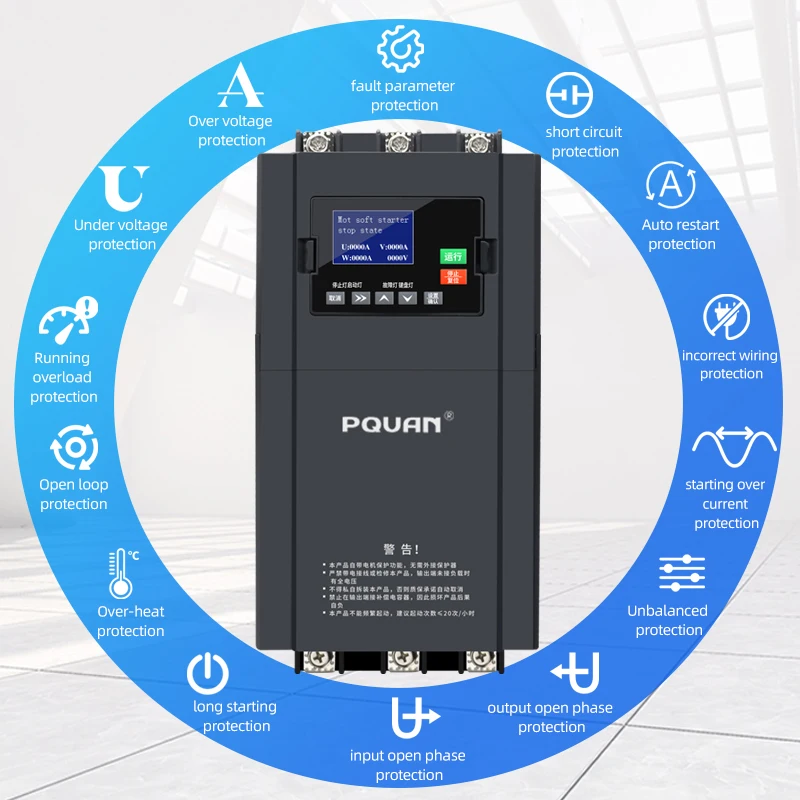
The sophisticated protection features integrated into industrial VFD systems safeguard both the drive itself and connected motors against a wide range of electrical and mechanical faults, significantly improving overall system reliability and reducing unplanned downtime. Built-in protection functions monitor critical parameters including motor current, voltage levels, temperature, and operating frequency, automatically taking protective action when abnormal conditions are detected. Overcurrent protection prevents motor damage during overload conditions by gradually reducing motor speed or stopping operation before harmful current levels are reached. Undervoltage and overvoltage protection shields sensitive motor windings from damaging voltage fluctuations that commonly occur in industrial electrical systems. The thermal protection capabilities of industrial VFD systems monitor motor temperature through various methods including embedded temperature sensors and thermal modeling algorithms that estimate motor temperature based on operating conditions. Ground fault protection detects insulation failures and immediately isolates the motor to prevent equipment damage and ensure personnel safety. Phase loss protection identifies single-phasing conditions that can quickly destroy three-phase motors if not detected promptly. Short circuit protection provides rapid isolation during fault conditions, preventing cascading failures that could affect other system components. The diagnostic capabilities of modern industrial VFD units continuously monitor system health and provide detailed fault information that helps maintenance personnel quickly identify and resolve problems. Predictive maintenance features analyze operating patterns and component performance to provide early warning of potential failures, enabling proactive maintenance that prevents unexpected breakdowns. Remote monitoring capabilities allow maintenance teams to track industrial VFD performance from central locations, reducing the need for frequent site visits and enabling faster response to emerging issues.
Industrial VFD Solutions: Advanced Variable Frequency Drives for Enhanced Motor Control and Energy Efficiency

Get a Free Quote

Our representative will contact you soon.
Email
Name
Company Name
Message
0/1000