 EN
EN
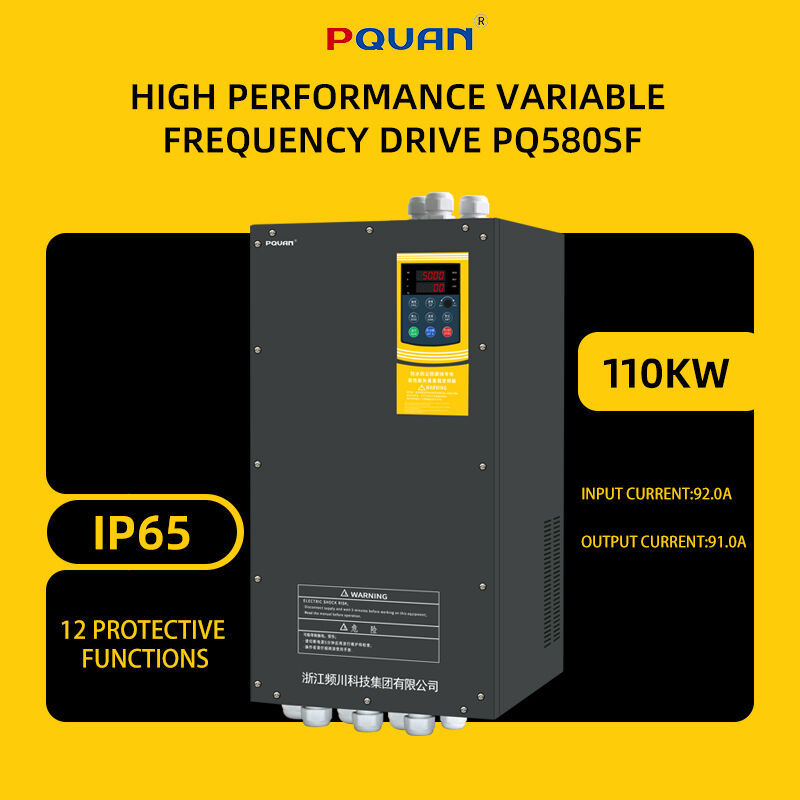
Selecting the right industrial automation components is crucial for maintaining operational efficiency, minimizing energy expenditure, and extending the lifespan of your mechanical systems. A Variable Frequency Drive (VFD) serves as the core controller for your electric motors, regulating speed and torque to match the precise demands of your application. However, navigating the market to find a high-quality VFD drive requires a deep understanding of specific technical capabilities and protective features.
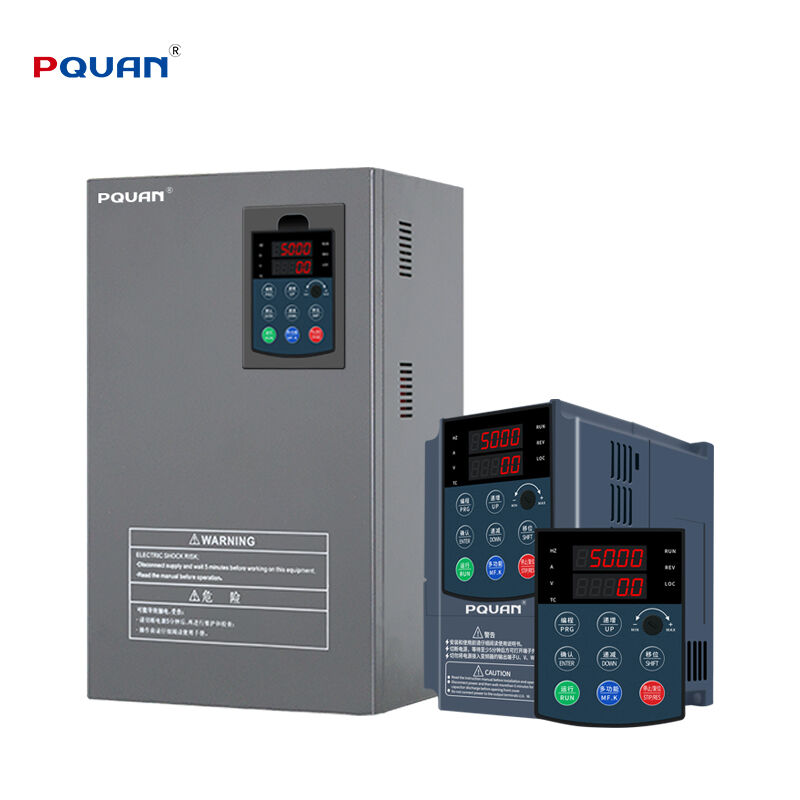
The ideal VFD drive does more than just alter motor speeds; it integrates seamlessly into your existing control architecture, safeguards your hardware from electrical anomalies, and adapts to various environmental challenges. Whether you are managing industrial water pumps, heavy-duty ventilation fans, automated conveyor networks, or high-capacity air compressors, focusing on premium engineering features ensures long-term reliability and an optimal return on investment.
Essential Motor Control Capabilities and Software Intelligence
The primary benchmark of a high-quality VFD drive is its underlying control algorithms and software sophistication. Advanced drive units offer versatile control modes, moving beyond standard Volts-per-Hertz (V/Hz) regulation to incorporate sensorless vector control or closed-loop flux vector control. Sensorless vector control allows the drive to calculate motor speed and torque mathematically without requiring an external encoder feedback loop, providing exceptional low-speed torque and precise velocity regulation even under fluctuating load conditions.
Furthermore, intelligent software features like automatic motor tuning are indispensable. Upon installation, a premium drive performs a static or dynamic identification run to measure the motor's internal stator resistance, leakage inductance, and saturation characteristics. This automated calibration optimizes the drive’s output waveform specifically for that motor, maximizing energy efficiency and reducing heat generation within the motor windings. Advanced firmware also includes specialized macros for common applications, allowing operators to configure complex acceleration ramps, multi-speed presets, and PID loops for automated pressure or flow regulation with minimal commissioning time.
Robust Electrical Protection and Environmental Resilience
Industrial environments subject electrical equipment to severe thermal stress, power grid fluctuations, and atmospheric contaminants. Therefore, a superior VFD drive must possess heavy-duty physical and electrical protection mechanisms. On the electrical side, look for integrated DC link chokes or AC line reactors. These components act as a critical defense line, mitigating harmonic distortion fed back into your facility's power grid while shielding the drive's internal sensitive electronics from incoming high-voltage utility surges and transient spikes.
Physical resilience is equally vital to prevent premature hardware failure. High-quality drives feature conformal coating on all internal printed circuit boards (PCBs). This microscopic protective layer isolates electronic circuits from airborne moisture, conductive dust, oil mist, and corrosive chemical vapors frequently found in industrial plants. Additionally, advanced thermal management architectures—such as segregated cooling channels that keep dust-laden airflow away from sensitive electronic components—ensure the unit operates reliably at its full rated capacity without thermal derating, even in high ambient temperatures.
Industrial Communication Interfaces and Operator Ergonomics
Modern factory floors rely heavily on interconnected devices and real-time data collection to achieve the goals of Industry 4.0. A premium drive must act as an intelligent node within this network. Look for units that feature native support for industry-standard communication protocols, such as Modbus RTU, Profibus, EtherNet/IP, or PROFINET. These interfaces allow the drive to transmit critical diagnostics, energy consumption metrics, and real-time fault codes directly to a centralized Programmable Logic Controller (PLC) or SCADA system, enabling predictive maintenance strategies and comprehensive process monitoring.
Human-machine interface (HMI) ergonomics should not be overlooked during the evaluation process. High-quality drives feature detachable, multi-lingual graphical keypads with clear LCD displays instead of basic, cryptic LED segment codes. These advanced keypads often include copy-and-paste functionality, allowing maintenance technicians to save parameter configurations from one drive and download them directly into another, drastically reducing replacement and configuration time during emergency maintenance events.
Comprehensive Selection and Application Matrix
To help streamline your procurement and engineering decisions, the following matrix contrasts key features across various standard industrial applications, ensuring you prioritize the right capabilities for your specific operational needs.
| Industrial Application | Critical VFD Drive Feature | Technical Justification |
| Centrifugal Water Pumps | Advanced Built-in PID Control & Sleep Mode | Maintains constant pipeline pressure by automatically adjusting speed based on transducer feedback, shutting down during zero-flow periods to save power. |
| Industrial HVAC Fans | Flying Start Capability & Resonance Skip Frequencies | Safely catches and controls a fan blade already spinning due to natural drafts, while preventing the motor from running at speeds that cause destructive mechanical vibration. |
| Material Handling Conveyors | High Starting Torque & Dynamic Braking | Overcomes high static friction when starting fully loaded belts from a dead stop, and provides controlled deceleration without causing overvoltage faults. |
| Air Compressors | Rapid Torque Response & High Overload Capacity | Manages sudden, sharp air demand shifts efficiently while sustaining temporary current overloads without tripping during heavy compression cycles. |
Frequently Asked Questions
What is the difference between normal duty and heavy duty ratings in a VFD drive?
Normal duty ratings are designed for variable torque loads like centrifugal pumps and fans, where torque requirements drop as speed decreases; these drives typically offer 110% overload protection for one minute. Heavy duty ratings are engineered for constant torque applications like conveyors and compressors, requiring a consistent torque profile across the entire speed range, offering 150% or higher overload protection for one minute to handle heavy mechanical starting loads.
Why is an integrated safe torque off function important for modern drives?
Safe Torque Off (STO) is a hardware-defined safety architecture that ensures no torque-generating energy can be delivered to the motor. It provides a highly reliable method for emergency stops and maintenance lockouts without needing to disconnect the main AC power line, reducing mechanical wear on external contactors and speeding up system restart times after a safety interruption.
How do harmonic filters on a VFD drive protect surrounding facility equipment?
Drives draw current in non-linear pulses, which generates electrical harmonic distortion back into the electrical distribution system. If left unmanaged, these harmonics cause overheating in transformers, nuisance tripping of circuit breakers, and erratic behavior in sensitive nearby sensors; integrated chokes or external harmonic filters smoothen these current pulses, ensuring facility-wide power quality.
What advantage does a regenerative VFD drive offer over standard dynamic braking resistors?
Standard drives dissipate excess energy generated by braking motors as waste heat through large resistors. A regenerative drive, conversely, captures this braking electrical energy and cleans it up to feed it back into your facility’s main power grid, significantly lowering overall electricity costs in applications characterized by frequent deceleration cycles or continuous braking loads.
Table of Contents
- Essential Motor Control Capabilities and Software Intelligence
- Robust Electrical Protection and Environmental Resilience
- Industrial Communication Interfaces and Operator Ergonomics
- Comprehensive Selection and Application Matrix
-
Frequently Asked Questions
- What is the difference between normal duty and heavy duty ratings in a VFD drive?
- Why is an integrated safe torque off function important for modern drives?
- How do harmonic filters on a VFD drive protect surrounding facility equipment?
- What advantage does a regenerative VFD drive offer over standard dynamic braking resistors?