 EN
EN

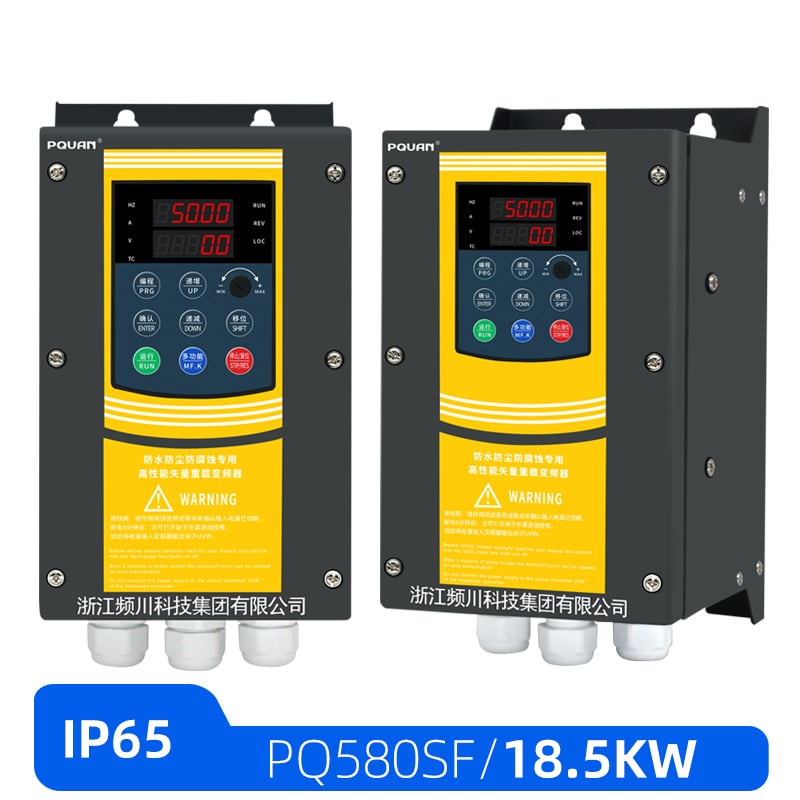
In today's interconnected industrial landscape, deploying an ac drive that carries internationally recognized certifications is no longer a luxury — it is a baseline requirement. Whether you are procuring variable frequency drives for a manufacturing plant in Europe, a commercial HVAC system in China, or an industrial pump network anywhere else in the world, the certification marks on your ac drive signal compliance with rigorous safety, electromagnetic compatibility, and performance benchmarks that protect both equipment and personnel.
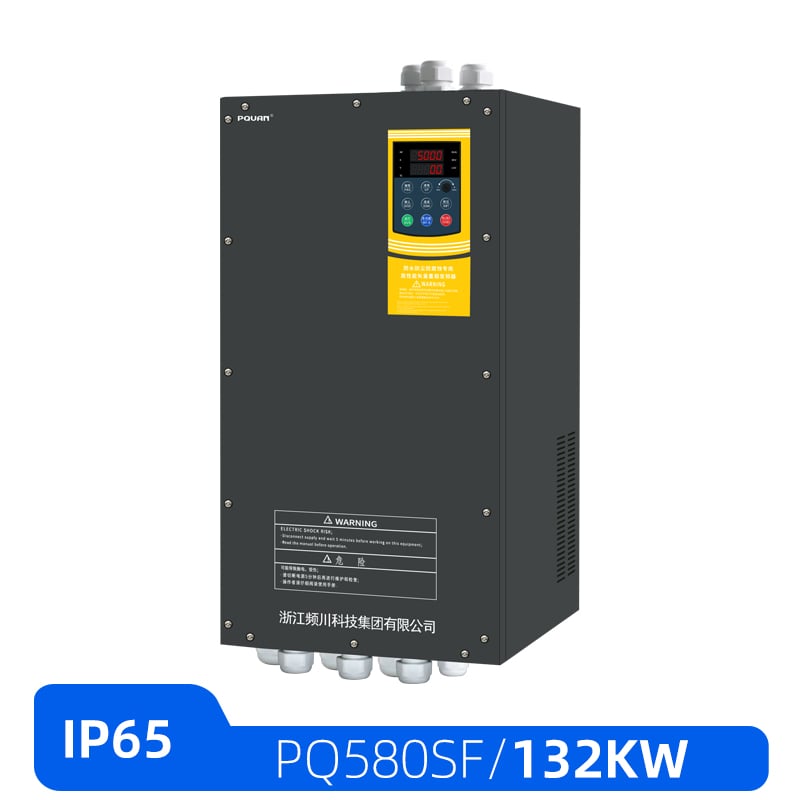
CE and CQC certifications represent two of the most consequential safety standards an ac drive can achieve, covering European market access and Chinese quality compliance respectively. Understanding what these marks demand, how an ac drive earns them, and why they matter to your procurement and operational decisions is essential for any engineer, purchasing manager, or facility operator working in global industrial markets. This article explores the standards, the technical requirements, and the practical implications of choosing a certified ac drive for your operations.
Understanding CE and CQC Certification for an AC Drive
What CE Certification Means for an AC Drive
The CE marking is a mandatory conformity mark for products sold within the European Economic Area. For an ac drive, achieving CE certification means the product has been assessed against several European directives, most notably the Low Voltage Directive (LVD) and the Electromagnetic Compatibility (EMC) Directive. These directives ensure that the ac drive operates safely within defined voltage limits and does not emit electromagnetic interference that could disrupt other equipment.
Beyond simply affixing a mark, CE compliance requires the ac drive manufacturer to compile a comprehensive technical file demonstrating conformity, conduct risk assessments, and issue a Declaration of Conformity. For drives with higher power ratings or specific industrial applications, third-party testing by a notified body may be required. This process ensures the ac drive is not merely claimed safe but verified safe according to European harmonized standards.
An ac drive that has earned CE certification can be freely marketed and installed across EU member states without facing additional national technical barriers. For buyers sourcing drives internationally, this mark dramatically simplifies regulatory navigation and reduces the risk of customs delays, site inspection failures, or costly product recalls.
What CQC Certification Means for an AC Drive
CQC, or China Quality Certification, is issued by the China Quality Certification Centre and applies to products entering the Chinese domestic market and global markets that recognize Chinese quality standards. While CCC (China Compulsory Certification) covers mandatory product categories, CQC certification is a voluntary program that signals a higher commitment to product quality and safety beyond the baseline legal requirements.
For an ac drive, CQC certification typically involves testing against GB/T standards that align with international IEC standards. This includes evaluation of insulation resistance, dielectric strength, thermal performance, protection ratings, and operational reliability under defined load conditions. Manufacturers who put their ac drive through CQC testing demonstrate that their product meets Chinese and internationally benchmarked quality criteria.
In practice, a CQC-certified ac drive carries significant credibility with Chinese industrial buyers, state-owned enterprises, and export-oriented manufacturers who must demonstrate supply chain quality governance. Combined with CE certification, a dual-certified ac drive becomes highly attractive for companies operating across both Asian and European markets.
Technical Requirements That a Certified AC Drive Must Satisfy
Electrical Safety and Insulation Standards
One of the most fundamental requirements for a certified ac drive is electrical safety. The ac drive must withstand dielectric voltage tests, meaning its internal insulation must prevent breakdown at voltages significantly higher than normal operating levels. This protects both the drive itself and connected equipment from insulation failure that could cause electrical shock, fire, or equipment destruction.
Protective earthing, creepage distances, and clearance dimensions between live components are all specified in the relevant standards. A properly certified ac drive is designed with these spatial requirements built into the PCB layout, enclosure design, and terminal block configuration. These are not cosmetic choices but engineered safety margins that prevent arc faults under fault conditions.
For industrial pump and fan applications, where an ac drive may operate continuously in humid or dusty environments, IP (Ingress Protection) ratings also become relevant to certification. An ac drive designed for these environments must demonstrate that its enclosure prevents moisture and particulate ingress from compromising electrical safety over its service life.
Electromagnetic Compatibility Requirements
An ac drive generates and processes high-frequency switching signals as part of its pulse-width modulation (PWM) operation. Without proper EMC engineering, these signals can radiate or conduct along power cables and corrupt signals in nearby control systems, sensors, or communication networks. CE certification under the EMC Directive specifically addresses this risk by requiring an ac drive to meet both emissions limits and immunity thresholds.
Emissions testing ensures the ac drive does not produce electromagnetic noise beyond defined limits in both conducted (through wiring) and radiated (through air) forms. Immunity testing ensures the ac drive continues to operate correctly when exposed to external interference sources such as electrostatic discharge, fast transients, and surge voltages. Both aspects must be validated for the ac drive to earn and retain its CE mark.
In practice, EMC compliance typically involves internal filtering components such as line reactors, EMC filters, and carefully designed cable shielding guidelines in the installation manual. A well-certified ac drive will include detailed guidance on installation practices that maintain EMC compliance in real-world environments, bridging the gap between laboratory testing and field deployment.
How Certification Benefits Industrial Buyers and End Users
Simplified Market Access and Regulatory Compliance
For procurement teams and project managers, sourcing a certified ac drive eliminates a significant layer of regulatory risk. When a project requires installation in a CE-governed market, choosing an already-certified ac drive means you are not dependent on conducting your own conformity assessment or negotiating exemptions with local authorities. The manufacturer has already done that work, and the documentation trail supports your site compliance records.
Similarly, in Chinese industrial projects, specifying a CQC-certified ac drive often satisfies procurement committee requirements for quality substantiation. Government-linked projects, large-scale infrastructure developments, and ISO-certified factories may all require evidence of component-level quality certification, and a certified ac drive satisfies these demands directly.
This regulatory simplicity also affects project timelines. A non-certified ac drive may be rejected during equipment inspection phases, triggering procurement restarts and construction delays. Choosing a certified ac drive from the outset is a timeline protection strategy as much as a technical one.
Operational Reliability and Long-Term Safety
Beyond paperwork, a certified ac drive has undergone real-world stress testing that validates its reliability under the conditions it was designed for. Thermal cycling tests, vibration resistance checks, and continuous load endurance runs are part of what a certified ac drive must survive before leaving the test facility. This means buyers can reasonably expect consistent performance across the product's intended service life.
For motor-driven applications like industrial pumps and fans, where the ac drive runs for thousands of hours per year, this operational reliability translates directly into reduced maintenance costs, fewer unexpected shutdowns, and better energy efficiency outcomes. A certified ac drive is more likely to deliver on its rated efficiency curves because those curves were verified during certification testing, not merely claimed in a marketing brochure.
Safety also extends to the people who install and maintain the ac drive. Certified products must include adequate warnings, clearly labeled terminals, and protective features such as overcurrent protection, overvoltage lockout, and thermal overload response. A certified ac drive helps ensure that maintenance technicians can work safely and that automatic protections engage correctly during fault events.
Vector Control and Energy Efficiency in a Certified AC Drive
Vector Control Technology and Its Role in Certification
Modern high-efficiency ac drive designs increasingly incorporate vector control algorithms, which allow precise regulation of motor torque and speed independent of load variations. This technology is relevant to certification because more sophisticated control architectures must still pass the same safety and EMC tests as simpler drives, and vector control adds additional complexity in terms of signal processing, sensor integration, and software safety interlocks.
A certified ac drive with vector control capability demonstrates that the manufacturer has not only advanced the product's performance but has also ensured the advanced features operate within the safety boundaries defined by CE and CQC standards. This includes verifying that the drive's protective functions remain active and responsive even when vector control algorithms are actively managing the motor under dynamic load conditions.
For buyers deploying an ac drive in variable-load pump or fan systems, vector control offers real efficiency gains by eliminating unnecessary energy consumption during partial load operation. When this capability comes packaged within a certified ac drive, buyers gain both the performance advantage and the compliance assurance simultaneously.
Energy Efficiency Standards and Their Interaction with AC Drive Certification
Energy efficiency is increasingly woven into the regulatory fabric surrounding industrial drives. In Europe, the Ecodesign Directive and related implementing regulations establish minimum efficiency requirements for motor systems, of which the ac drive is a central component. A CE-certified ac drive must align with these efficiency-related requirements as part of its conformity package.
In China, GB standards for energy efficiency also govern the performance benchmarks that an ac drive must meet in relevant applications. CQC testing can incorporate energy efficiency verification, giving the certified ac drive a documented efficiency claim that is independently validated rather than self-reported.
When specifying an ac drive for high-duty-cycle applications such as water supply pumps, cooling fans, or process compressors, the energy efficiency credentials embedded in its certification documentation provide a reliable foundation for lifecycle cost analysis. Rather than estimating efficiency based on vendor claims, buyers can reference certified test data to build accurate ROI projections for their investments in ac drive technology.
FAQ
Does CE certification on an ac drive guarantee it can be sold in all European countries?
CE certification indicates that the ac drive meets the essential requirements of relevant EU directives, which allows it to be placed on the market and put into service across all EU member states and the broader European Economic Area without additional national technical barriers. However, buyers should verify that the specific directives and standards covered by the CE mark match the requirements of their particular application and installation environment, as different use cases may invoke different regulatory requirements.
Is CQC certification mandatory for an ac drive sold in China?
CQC certification is a voluntary quality certification rather than a mandatory requirement in most cases. For an ac drive, the mandatory baseline in China is typically CCC (China Compulsory Certification) if the product category falls under the CCC catalog. CQC certification goes beyond this baseline and is often sought voluntarily by manufacturers to demonstrate superior quality compliance and gain competitive credibility with demanding buyers, particularly in government-linked projects and ISO-governed supply chains.
Can a certified ac drive be used across multiple industrial applications without losing its certification validity?
A certified ac drive retains its certification validity provided it is installed and operated in accordance with the conditions specified in its certification documentation and installation manual. Using the ac drive outside its rated parameters, modifying its hardware or firmware, or installing it in environments beyond its rated protection class may invalidate the certification. Buyers should consult the drive's technical documentation and, where necessary, the certifying body to confirm that their intended application remains within the scope of the existing certification.
How often does an ac drive need to be re-certified after initial approval?
Certification validity depends on the specific certification scheme. For CE marking, the manufacturer is responsible for ensuring ongoing conformity and must update the technical file and Declaration of Conformity whenever a significant design change is made to the ac drive. For CQC certification, the China Quality Certification Centre conducts periodic factory inspections and may require re-testing if standards are updated or if design modifications are reported. Buyers sourcing an ac drive for long-term supply agreements should verify that the manufacturer has a structured process for maintaining certification currency across the product lifecycle.
Table of Contents
- Understanding CE and CQC Certification for an AC Drive
- Technical Requirements That a Certified AC Drive Must Satisfy
- How Certification Benefits Industrial Buyers and End Users
- Vector Control and Energy Efficiency in a Certified AC Drive
-
FAQ
- Does CE certification on an ac drive guarantee it can be sold in all European countries?
- Is CQC certification mandatory for an ac drive sold in China?
- Can a certified ac drive be used across multiple industrial applications without losing its certification validity?
- How often does an ac drive need to be re-certified after initial approval?