 EN
EN

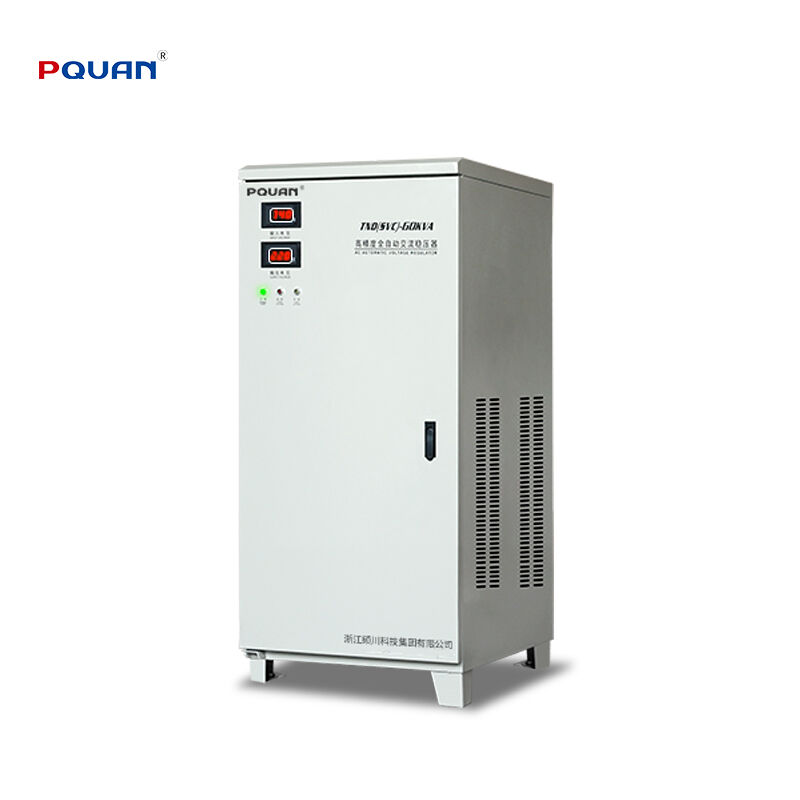
Electrical grid instability is a constant challenge for modern industrial facilities and commercial infrastructure. Power fluctuations, ranging from sudden voltage sags during peak demand hours to high-energy transient spikes caused by lightning, can severely compromise the performance of electronic components and electric motors. To protect expensive hardware, engineering teams must deploy dedicated power conditioning solutions. However, deciding between an Automatic Voltage Regulator and a traditional manual voltage stabilizer is a critical choice that directly impacts operational efficiency and facility safety.
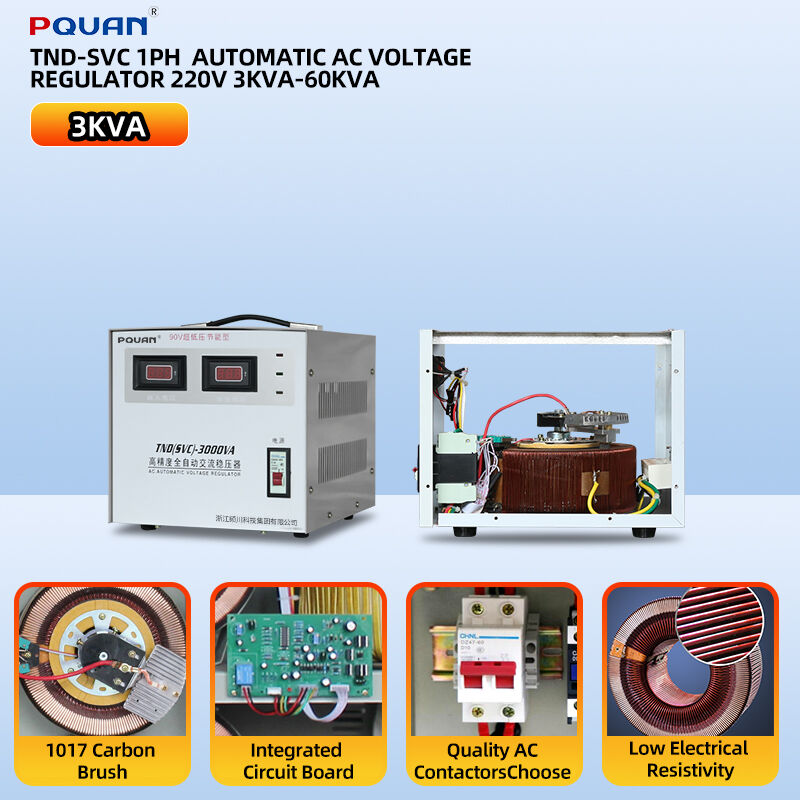
While both systems are designed to adjust voltage levels to protect downstream machinery, their underlying technologies, operational efficiencies, and safety profiles are vastly different. An Automatic Voltage Regulator represents a modern, digitally managed solution that operates without human intervention, whereas manual stabilizers rely entirely on physical adjustments made by an operator. Choosing the right technology requires a comprehensive look at how these differences affect your specific industrial applications, maintenance workflows, and long-term utility expenses.
Operational Efficiency and Response Speed Analysis
The fundamental difference between these two power conditioning systems lies in how they detect and correct voltage anomalies. A manual voltage stabilizer requires an operator to physically monitor an analog voltmeter and turn a mechanical rotary switch to select different transformer taps when grid conditions change. This manual process is slow and introduces human error, making it incapable of protecting sensitive equipment from rapid, unexpected power surges or transient line dips that occur in milliseconds.
In contrast, an Automatic Voltage Regulator functions as an intelligent, self-contained closed-loop system. It utilizes an advanced internal microprocessor control board that continuously samples the incoming utility line voltage at high frequencies. When the incoming power drifts outside of safe thresholds, the digital controller instantly commands internal solid-state electronic switches or a high-speed servo motor to modify the transformer turns ratio. This automated correction occurs in milliseconds, ensuring that your machinery receives a steady, unyielding supply of clean electricity without requiring any manual oversight or facility downtime.
Safety Engineering and Human Error Mitigation
In heavy industrial environments, safety is the absolute priority for maintenance teams. Operating a manual stabilizer introduces distinct physical risks for personnel. Manually switching high-current transformer taps under heavy load conditions can generate internal electrical arcing, which causes contacts to pit over time and poses an arc-flash hazard to the operator. Furthermore, if an operator forgets to manually adjust the stabilizer back to baseline after a severe voltage sag ends, a subsequent return to normal grid levels can cause an overvoltage condition, potentially burning out downstream equipment.
Deploying a modern Automatic Voltage Regulator eliminates these operational hazards entirely. These automated systems are engineered with comprehensive, internationally validated protective hardware routines embedded directly into their firmware. The control processor provides real-time, autonomous mitigation against phase loss, output short-circuits, ground faults, thermal overloads, and extreme overvoltage anomalies. If grid voltage shifts completely outside the unit's safe working window, the regulator triggers an automatic safety trip, instantly isolating your facility assets from catastrophic damage before any manual intervention could ever be mounted.
Application Suitability and Technology Comparison
Different industrial machines present unique load characteristics that require specific power management strategies. To help your engineering team make a well-informed procurement decision, the following matrix contrasts the performance capabilities of both technologies across standard industrial equipment groups.
| Performance Attribute | Manual Voltage Stabilizer | Automatic Voltage Regulator | Industrial Application Impact |
| Response Velocity | Slow (Minutes, depending on operator reaction time). | Ultra-Fast (Milliseconds via electronic or servo control). | Critical for safeguarding sensitive electronics, CNC machinery, and digital sensors from sudden grid spikes. |
| Regulation Precision | Coarse, stepped adjustments based on limited mechanical tap selections. | Exceptionally precise, smooth, step-less voltage tracking. | Stabilizes the operation of large ventilation fans and air compressors, preventing motor velocity drifting. |
| Labor Requirement | High (Requires dedicated personnel for continuous monitoring and switching). | Zero (Operates autonomously as a set-and-forget solution). | Lowers long-term operational overhead and frees up maintenance teams for predictive facility workflows. |
| Surge Accommodation | Poor (Cannot react fast enough to block high-energy transient spikes). | Excellent (Features integrated suppression circuits and high surge delays). | Prevents localized low-voltage collapse during the intense inrush currents of industrial water pumps. |
Infrastructure Integration and Industry 4.0 Compatibility
As factories transition toward smarter, highly automated production environments, equipment interconnectivity becomes vital for maintaining peak overall equipment effectiveness (OEE). Traditional manual stabilizers are isolated mechanical components that offer no data collection or communication capability. They cannot transmit diagnostic codes, log historical power trends, or alert plant managers to underlying electrical issues, forcing maintenance teams into a purely reactive troubleshooting posture.
A high-quality Automatic Voltage Regulator bridges this gap by acting as an intelligent node within your facility’s industrial automation network. Premium regulators are equipped with native digital communication interfaces, supporting industry-standard protocols like Modbus RTU or EtherNet/IP. These interfaces stream real-time telemetry—including current draw, input/output voltage metrics, thermal signatures, and historical fault logs—directly to a centralized PLC or SCADA system. This allows engineering teams to implement predictive maintenance strategies, identifying grid vulnerabilities or failing components before they can cause an expensive, unexpected assembly line stoppage.
Frequently Asked Questions
What is the primary technological difference between an Automatic Voltage Regulator and a VFD drive?
While both systems regulate electrical parameters for industrial machinery, they serve entirely different functions. An Automatic Voltage Regulator stabilizes incoming utility grid fluctuations to deliver a steady, nominal AC voltage output at a fixed line frequency (such as 50Hz or 60Hz) to protect general equipment. A variable frequency drive (VFD), conversely, is a specialized motor controller that actively varies both the voltage and the frequency output to control the speed and torque of a specific AC motor.
How do I accurately calculate the required capacity for a regulator installation?
To determine the correct capacity size, calculate the total volt-ampere (VA or kVA) consumption of all connected equipment by multiplying the maximum running current by the operational voltage. You must add a safety margin of at least twenty to thirty percent to this total to safely accommodate future facility expansions and the high starting inrush currents characteristic of large inductive electric motors.
Can an automated voltage regulator protect my machinery from a total blackout?
No, an automated voltage regulator cannot maintain power during a total blackout, as it does not store electrical energy. Its function is to correct voltage sags, surges, and brownouts while the grid is active. To protect your production line from a complete power failure, you must integrate the regulator alongside an Uninterruptible Power Supply (UPS) system or an automated backup generator network.
Why is periodic torque verification necessary after installing a voltage regulator?
Thermal cycling—the natural expansion and contraction of electrical conductors as they heat up under mechanical load and cool down when idle—gradually loosens internal terminal connections over time. Loose connections increase electrical resistance, leading to localized heat buildup, erratic voltage readouts, and eventual terminal failure if not checked with a calibrated torque wrench during annual preventative maintenance shutdowns.
Table of Contents
- Operational Efficiency and Response Speed Analysis
- Safety Engineering and Human Error Mitigation
- Application Suitability and Technology Comparison
- Infrastructure Integration and Industry 4.0 Compatibility
-
Frequently Asked Questions
- What is the primary technological difference between an Automatic Voltage Regulator and a VFD drive?
- How do I accurately calculate the required capacity for a regulator installation?
- Can an automated voltage regulator protect my machinery from a total blackout?
- Why is periodic torque verification necessary after installing a voltage regulator?