 EN

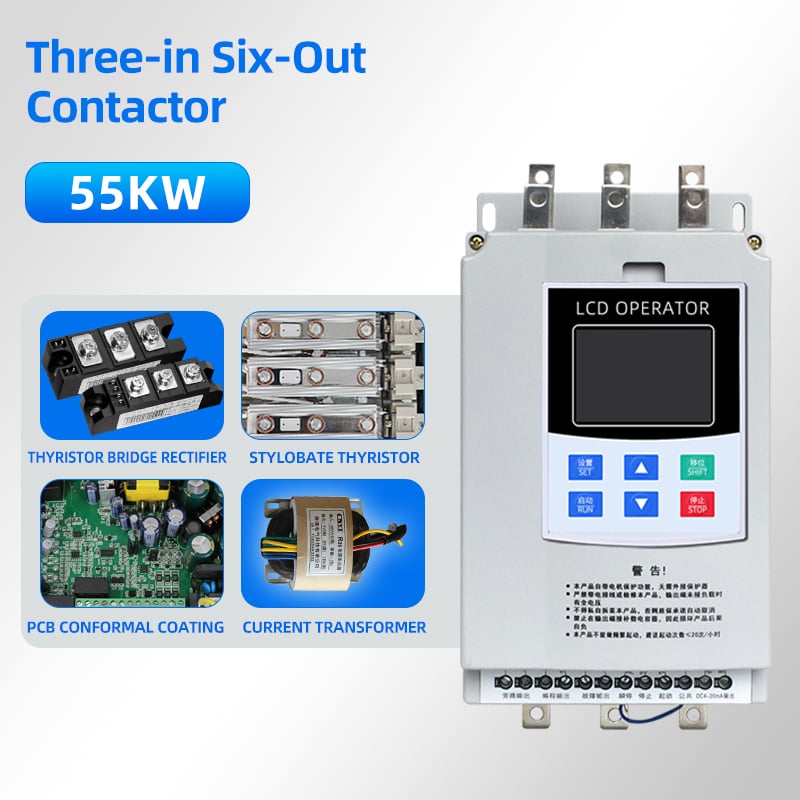
Choosing the right motor control solution is crucial for industrial operations, and the decision between a soft starter and a variable frequency drive (VFD) can significantly impact your equipment performance, energy efficiency, and operational costs. Both technologies serve to reduce inrush current and protect motors during startup, yet they operate through fundamentally different mechanisms and offer distinct advantages depending on your specific application requirements. Understanding the core differences between a soft starter and a VFD drive empowers you to make an informed decision that aligns with your facility's operational goals and budget constraints.
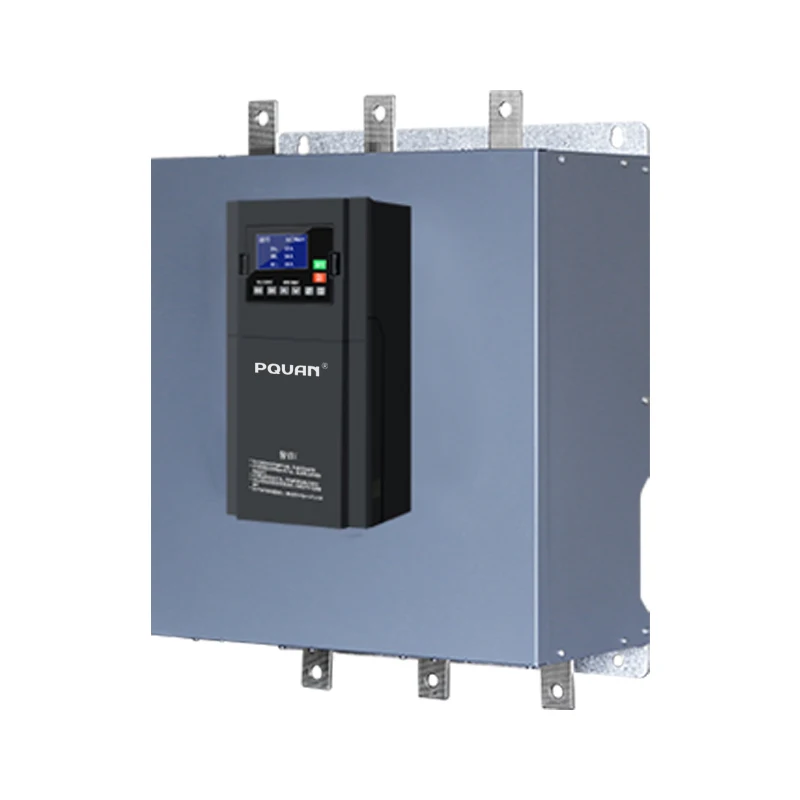
The fundamental distinction between a soft starter and a traditional fixed-speed starter lies in how each device manages motor acceleration and current draw. A soft starter uses solid-state thyristors to gradually increase voltage across the motor windings during the startup phase, creating a smooth ramp that reduces mechanical stress and electrical stress on connected equipment. This measured approach prevents the sudden current surge typical of direct-on-line starters, protecting sensitive downstream machinery and extending motor lifespan. When evaluating whether a soft starter meets your needs, you must consider factors such as the type of load being driven, the frequency of starts, energy efficiency priorities, and long-term operational cost calculations.
How a Soft Starter Controls Motor Acceleration
Gradual Voltage Ramping Mechanism
A soft starter achieves its function by controlling the voltage delivered to the motor during the acceleration phase. The device employs pairs of thyristors connected in antiparallel configuration, allowing precise voltage modulation from zero to full voltage across a programmable time interval. This voltage ramping capability means that instead of the motor experiencing a sudden full-voltage inrush, it receives a controlled, escalating voltage profile that builds torque gradually while limiting inrush current to typically 2–3 times full-load current rather than the 6–10 times experienced with direct-on-line starting. A soft starter typically operates at full voltage during the running phase, making it ideal for applications where constant speed operation is the primary requirement.
Current and Torque Management Benefits
The soft starter's ability to limit inrush current provides multiple operational advantages that justify its installation cost in many industrial settings. Reduced inrush current minimizes voltage dips on the power distribution system, protecting other equipment connected to the same electrical circuit from experiencing voltage fluctuations that could disrupt sensitive operations or damage connected devices. The soft starter also reduces mechanical shock loading on driven equipment, extending the service life of pumps, compressors, conveyor systems, and other machinery. From an electrical standpoint, a soft starter reduces stress on motor insulation and bearings, resulting in fewer maintenance requirements and longer intervals between overhauls.
When a Soft Starter Outperforms a VFD Drive
Applications Requiring Fixed-Speed Operation
A soft starter excels in applications where the driven equipment operates at a constant speed after the initial startup phase. Centrifugal pumps, compressors, and fans in fixed-speed systems benefit significantly from soft starter installation because the device's smooth startup protection is all that the application requires. Since a soft starter does not provide variable speed control, it eliminates the unnecessary complexity and cost associated with VFD drives in scenarios where speed variation offers no operational benefit. The soft starter's lower capital cost and simpler control architecture make it the economical choice for facilities running large numbers of constant-speed motors or for budget-conscious operations seeking inrush current reduction without advanced speed control capabilities.
Cost and Maintenance Efficiency
Installation and operating costs strongly favor a soft starter in applications where VFD functionality would remain underutilized. A soft starter costs significantly less than an equivalent VFD drive, often 40 to 60 percent lower in initial purchase price depending on motor size and feature complexity. Beyond the purchase price, a soft starter requires minimal maintenance compared to VFD systems, which demand careful cooling management, cable shielding considerations, and periodic component inspections to ensure reliable operation. Since a soft starter generates less heat and electromagnetic interference than a VFD, integration into existing electrical infrastructure typically requires less engineering and installation expense, making it an attractive option for retrofit projects or facility expansion.
Key Differences Between Soft Starter and VFD Technology
Operating Voltage and Output Characteristics
The most fundamental difference between a soft starter and a VFD drive lies in their operating principles and output characteristics after the startup phase concludes. A soft starter delivers full 50 Hz or 60 Hz fixed-frequency voltage to the motor after the startup ramp, maintaining constant speed operation regardless of load variations. In contrast, a VFD drive converts incoming AC voltage to DC, then reconstructs a variable-frequency, variable-voltage AC waveform at the output, enabling true speed control across the motor's operating range. This architectural difference means that a soft starter cannot reduce motor speed below synchronous speed in normal operation, while a VFD can modulate motor speed from near-zero to full speed with precise control. A VFD's energy-saving capability through speed reduction makes it superior for applications where load and speed requirements fluctuate throughout the operating day.
Energy Consumption and Efficiency Profiles
Energy efficiency considerations often determine whether a soft starter or VFD represents the better long-term investment for a facility. A soft starter reduces energy losses only during the startup phase, delivering the same full voltage and frequency to the motor during the running phase as a conventional starter would. For applications with minimal startup cycles or where the motor runs continuously after startup, a soft starter provides limited ongoing energy savings. A VFD drive, by contrast, continuously optimizes energy consumption by matching motor speed to actual load requirements, typically achieving 20 to 50 percent energy savings in variable-load applications such as HVAC systems, conveyor controls, and process facilities where speed modulation aligns with production demands. However, a VFD's constant-frequency output switching can generate heat and electromagnetic noise, requiring careful installation and potentially necessitating additional cooling measures in confined equipment enclosures.
FAQ
What is the primary function of a soft starter in motor control systems?
A soft starter's primary function is to reduce inrush current during motor startup by gradually ramping voltage from zero to full voltage across a programmable time interval. This smooth acceleration protects the motor, driven equipment, and electrical distribution system from sudden current surges and mechanical shock. A soft starter maintains full-voltage, fixed-frequency operation during the running phase, making it ideal for applications requiring constant-speed operation after startup.
Can a soft starter replace a VFD drive in all applications?
A soft starter cannot replace a VFD in applications requiring variable speed control or energy optimization through speed adjustment. A soft starter functions optimally in fixed-speed applications where smooth startup is the primary control objective. Applications such as centrifugal pumps, compressors, and fans in constant-load scenarios benefit from a soft starter's lower cost and simpler maintenance requirements. However, if your application requires speed modulation, load-matching, or energy savings through variable-frequency operation, a VFD drive remains the necessary technology.
How does the cost comparison between a soft starter and VFD drive affect purchasing decisions?
A soft starter typically costs 40 to 60 percent less than an equivalent VFD drive, making it the budget-friendly choice for installations where speed control is unnecessary. Installation, cooling requirements, and maintenance complexity also favor a soft starter in many scenarios. However, if your application can achieve significant energy savings through speed control, the VFD's higher capital cost may be offset by reduced operational energy expenses within a 3 to 5 year payback period, making the VFD the better long-term investment despite higher initial expense.