 EN


A CQC certified voltage regulator represents one of the most critical investments for industrial and commercial facilities seeking to protect sensitive equipment while maintaining compliance with international safety standards. When electrical supply quality becomes unpredictable, a voltage regulator serves as the essential safeguard between unstable power sources and valuable machinery, ensuring stable output voltage regardless of input fluctuations. Understanding what makes a voltage regulator CQC certified and why this certification matters can significantly influence your equipment protection strategy and operational reliability.
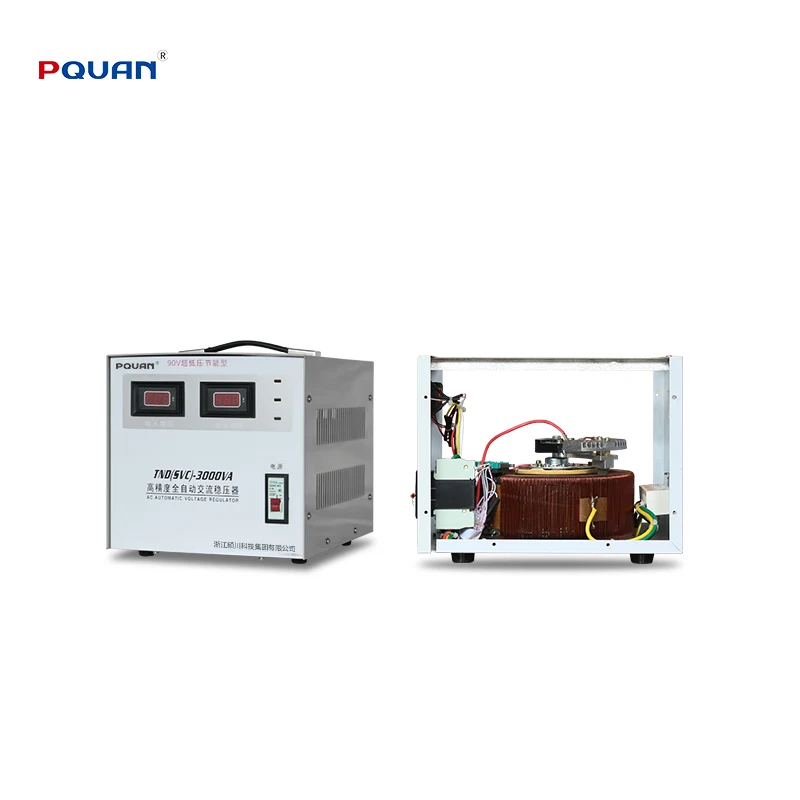
The voltage regulator market includes many products, but those bearing CQC certification distinguish themselves through rigorous testing and adherence to safety protocols that exceed basic industry minimums. A voltage regulator certified by the China Quality Certification Centre demonstrates that the device has passed comprehensive evaluations covering electrical safety, electromagnetic compatibility, environmental tolerance, and long-term durability. This certification provides facility managers, engineers, and procurement professionals with objective assurance that their chosen voltage regulator meets exacting international standards and will perform reliably under demanding industrial conditions.
Understanding CQC Certification for Voltage Regulator Systems
What CQC Certification Signifies
CQC certification for a voltage regulator indicates that the device has been independently evaluated and tested against stringent safety and performance requirements established by the China Quality Certification Centre. This process involves examining the voltage regulator's design, manufacturing quality, component selection, safety features, and real-world performance under various load and environmental conditions. A certified voltage regulator must demonstrate consistent ability to regulate output voltage within specified tolerances, protect against overcurrent and overvoltage conditions, and operate safely across the full range of expected environmental variables.
Key Safety Standards Addressed
When a voltage regulator receives CQC certification, it confirms compliance with multiple international safety frameworks including IEC standards for electrical safety, EMC regulations for electromagnetic compatibility, and ISO standards for quality management. The voltage regulator undergoes testing for insulation integrity, temperature stability, short-circuit protection, grounding effectiveness, and harmonic distortion performance. These comprehensive evaluations ensure that the voltage regulator will not pose fire hazards, electrical shock risks, or electromagnetic interference to surrounding equipment and personnel.
How Voltage Regulator Certification Protects Your Operations
Equipment Protection and Longevity
A voltage regulator with CQC certification actively extends the operational lifespan of connected equipment by preventing voltage spikes, sags, and fluctuations that typically degrade sensitive components. Industrial machinery, HVAC systems, manufacturing equipment, and server infrastructure all benefit when a voltage regulator maintains stable power delivery within precise voltage tolerances. The certified voltage regulator's protective circuitry responds instantaneously to input voltage changes, automatically adjusting the output to keep connected loads operating within their design parameters, thereby reducing unexpected downtime and repair costs that result from voltage-related failures.
Risk Mitigation and Compliance Benefits
Organizations that install a CQC certified voltage regulator demonstrate commitment to meeting regulatory compliance requirements mandated by industrial authorities and insurance providers. The voltage regulator certification serves as documented evidence that facility infrastructure incorporates recognized safety measures, which can positively influence insurance premiums, regulatory inspections, and facility audits. Beyond compliance, the voltage regulator's certified safety features significantly reduce risks associated with electrical fires, equipment damage, data loss, and workplace hazards that might otherwise result from uncontrolled voltage variations affecting the facility's power distribution.
Selecting and Implementing Voltage Regulator Solutions
Determining Voltage Regulator Capacity Requirements
Choosing an appropriately sized voltage regulator requires careful analysis of your facility's total connected load, peak demand patterns, and anticipated future expansion. A voltage regulator undersized for your application will struggle to maintain voltage stability during high-load periods, while an oversized voltage regulator represents unnecessary capital expense and operational inefficiency. Professional assessment should evaluate the voltage regulator's continuous rating, surge capacity, response time to voltage transients, and compatibility with your facility's existing power management infrastructure. Once the correct voltage regulator capacity is identified, CQC certification ensures that the selected unit will reliably deliver its rated performance across all specified operating conditions.
Installation and Maintenance Considerations
A CQC certified voltage regulator requires proper installation by qualified personnel who understand electrical safety protocols and the specific voltage regulator model's configuration requirements. The voltage regulator should be positioned in a climate-controlled location with adequate ventilation to dissipate operating heat, and all connections must follow the manufacturer's specifications to maintain the voltage regulator's safety certification validity. Routine maintenance of the voltage regulator includes periodic inspection of cooling systems, verification of output voltage accuracy, and testing of protection circuits to confirm the voltage regulator continues functioning within design parameters. This ongoing maintenance ensures that your voltage regulator investment continues delivering the safety and performance benefits that CQC certification promises.
FAQ
What electrical standards does a CQC certified voltage regulator meet?
A CQC certified voltage regulator meets international standards including IEC 60146 for semiconductor rectifiers and thyristor valves, IEC 61000 for electromagnetic compatibility, and ISO 9001 for quality management systems. The voltage regulator also complies with safety standards covering insulation strength, grounding requirements, overcurrent protection, and thermal stability. These comprehensive standards ensure that your voltage regulator provides reliable protection while operating safely in industrial environments.
How does a voltage regulator protect equipment from voltage fluctuations?
A voltage regulator actively monitors incoming supply voltage and automatically adjusts its internal circuitry to maintain stable output voltage regardless of input variations. When input voltage rises, the voltage regulator reduces the output impedance to limit voltage rise at the load terminals; when input voltage drops, the voltage regulator increases the output impedance to support voltage at the load. This rapid, automatic compensation ensures that connected equipment receives consistent voltage within acceptable operating ranges, preventing damage from spikes, sags, and transient disturbances.
Is CQC certification sufficient for meeting international safety requirements?
CQC certification serves as comprehensive documentation that a voltage regulator meets recognized international safety and performance standards, making it suitable for installation in facilities worldwide. However, specific applications may require additional certifications such as CE marking for European markets, UL certification for North American installations, or regional regulatory approvals. When selecting a voltage regulator, verify that the CQC certification aligns with the specific safety standards required by your facility's location, industry sector, and equipment manufacturers' specifications.